
Short films live and die by how quickly they can grab an audience and deliver impact, and Lucy, directed by Bastien Leblanc, wastes very little time in doing just that. Running at just nine minutes, with a portion of that dedicated to end credits, this is a tightly constructed drama that hinges almost entirely on tension, atmosphere, and a single central performance.
Set in the South of France, the film opens in a deceptively calm manner. Suzan, played by Kya Garwood, is relaxing by a lakeside, speaking on the phone while her young daughter plays nearby in the shallow water. The setting is idyllic, almost postcard like, with the warm tones and natural surroundings creating a sense of peace. It is the kind of environment that feels safe, familiar, and entirely unthreatening.
That calm is quickly shattered.

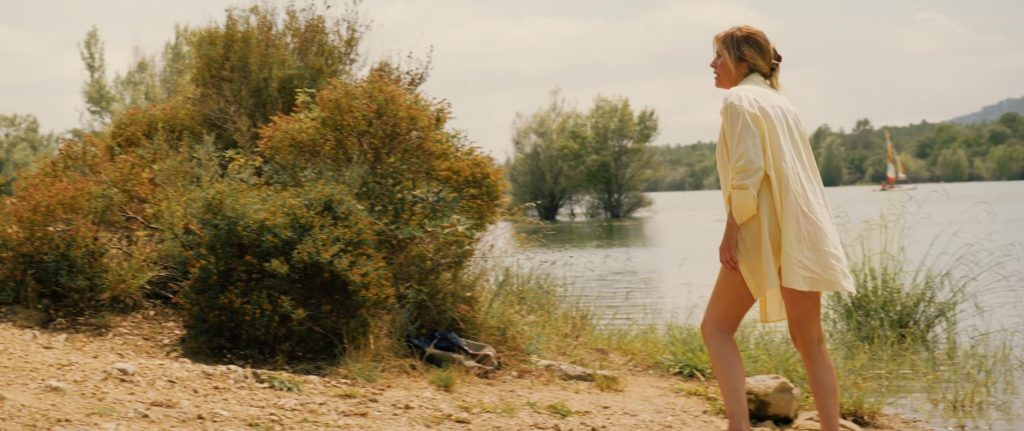
After briefly closing her eyes, Suzan wakes to find that her daughter, Lucy, has disappeared. What follows is an immediate shift in tone, as the film transitions from quiet serenity to rising panic. Suzan’s reaction is instinctive and believable. She calls out Lucy’s name, scanning the area before quickly gathering her belongings and setting off in search of her.
From this point on, Lucy becomes a focused and relentless search. Suzan moves through the surrounding woodland and open spaces, shouting for her daughter, her desperation growing with each passing moment. There is very little dialogue beyond her calls, which works in the film’s favour. The lack of conversation keeps the tension high and places the audience firmly in her perspective, experiencing the uncertainty and fear alongside her.
Along the way, she encounters a couple and enlists their help, adding a brief but important interaction that reinforces the seriousness of the situation. Even within its short runtime, the film manages to suggest a wider world beyond Suzan’s immediate panic, without losing focus on its central narrative.
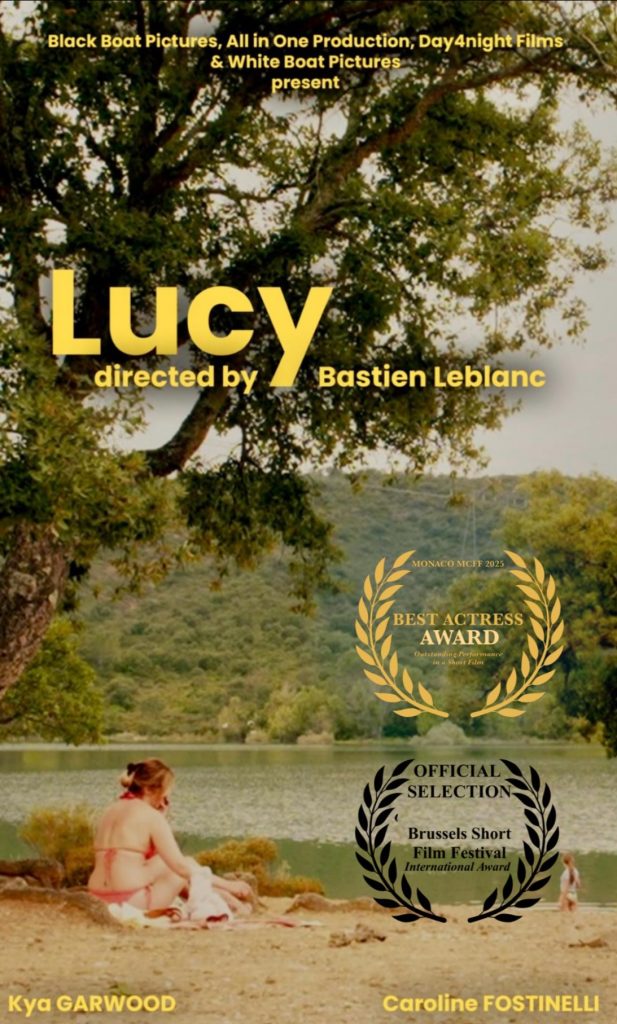
One of the strongest elements of Lucy is its visual presentation. The cinematography makes excellent use of the location, capturing both the beauty and isolation of the setting. The lake, the surrounding trees, and the open landscape are all shot with care, enhanced by a warm colour grade that convincingly sells the heat and atmosphere of the South of France. This contrast between a beautiful setting and a distressing situation adds an extra layer of unease.
The sound design also plays a key role. Early on, the natural ambience of the environment is allowed to breathe, with the gentle sounds of water and wildlife setting the scene. As Suzan’s search intensifies, the introduction of music helps build tension, guiding the emotional rhythm of the film without overwhelming it. It is a subtle but effective use of audio that complements the visuals well.
At the centre of it all is Kya Garwood’s performance. With limited time and minimal dialogue, she is tasked with carrying the emotional weight of the film, and she does so convincingly. Her portrayal of a mother in distress feels genuine, particularly as her panic escalates. There is a rawness to her performance that keeps the film grounded, ensuring that the situation never feels exaggerated or forced.
However, there are a few aspects that feel slightly less convincing. One moment that stands out is Suzan’s decision to move away from the lakeside relatively quickly. Given that Lucy was last seen in the water, it might seem more natural for her to focus her search there initially before heading further afield. It is a minor point, but one that does momentarily take you out of the logic of the situation.
The film’s ending is also left deliberately ambiguous. Without revealing specifics, it avoids providing a clear resolution, instead leaving the audience to interpret what has happened. This approach will likely divide viewers, with some appreciating the openness while others may find it frustrating. That said, it fits with the overall tone of the film, which leans more towards emotional impact than definitive answers.
Lucy is a short film filled with parent’s dread
Despite its brevity, Lucy manages to deliver a complete and engaging experience. It is a simple premise executed with care, relying on strong visuals, effective sound design, and a committed central performance to carry it through. While there are minor narrative choices that could be questioned, they do little to detract from the overall impact.
In a crowded short film landscape, Lucy stands out as a well crafted, tense piece of filmmaking that understands exactly what it wants to achieve. It is proof that even within a very limited runtime, a film can create genuine tension and leave a lasting impression.
| Acting | |
| Direction | |
| Cinematography | |
| Writing | |
| Sound | |
| Screen Critix Rating |