
Independent animation comes in many forms. Some productions strive for photorealism, while others embrace a much more handcrafted aesthetic, relying on imagination and storytelling rather than cutting-edge technology. Void, the latest short from filmmaker Roman Shattuck, firmly belongs in the latter category. Running for just over eleven minutes, this cosmic tale of guilt, survival and brotherhood proves that compelling ideas don’t necessarily require enormous budgets.
The film opens with an image of what appears to be an Earth-like planet peacefully floating through space. As the camera slowly pulls back, however, the scale of the story becomes immediately apparent. Beside the tiny world sits a colossal living skull, dwarfing the planet itself. Moments later, a robotic voice repeatedly declares, “I’m starving!”, before an even larger blue skeletal giant opens its mouth and effortlessly devours an entire planet in a single bite. It’s an unexpectedly striking introduction that quickly establishes both the film’s unusual visual style and its bleak universe.
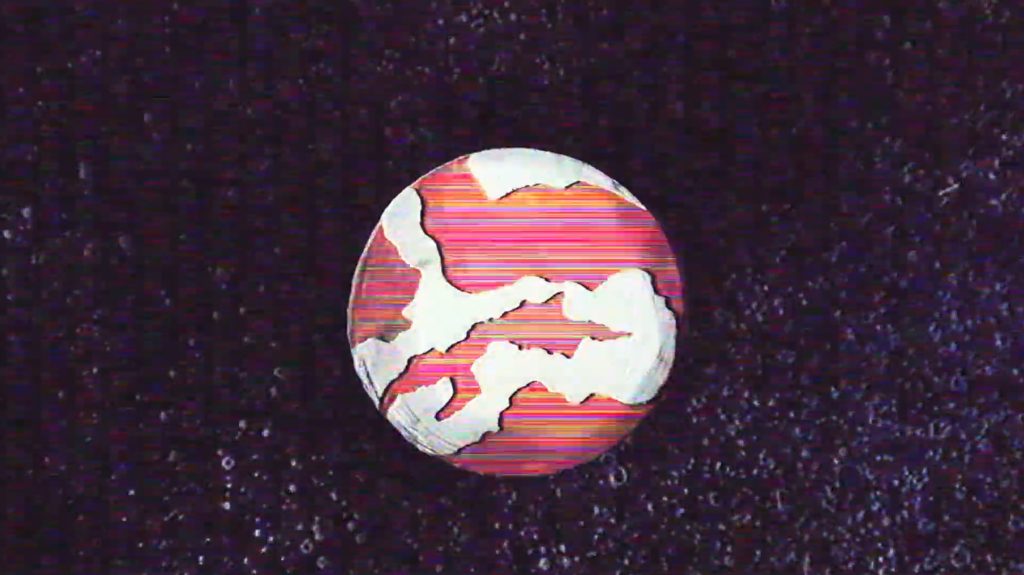
Before long, the giant encounters another world ready to become its next meal. Just as it prepares to consume it, a fist suddenly crashes into its jaw, knocking it away from its prey. The attacker is revealed to be another gigantic skeletal being, this time coloured green. What follows is an entertaining battle that unfolds across the vacuum of space itself, with the two brothers colliding through planets and stars, leaving destruction in their wake. Limbs are damaged, eyes are lost and celestial bodies become collateral damage as the fight escalates.
The confrontation eventually slows when the green giant becomes trapped, his shoulder lodged within a planet. Unable to free himself, he reveals that he has grown tired of the endless destruction they leave behind. Forced to consume inhabited worlds simply to survive, he has reached a point where the guilt has become unbearable. Rather than continue destroying innocent civilisations to satisfy his hunger, he would rather die.
His brother sees things very differently.
The blue giant coldly tells him to end his own life if he truly feels that way. The green giant instead wishes they could die together, bringing an end to the cycle of destruction once and for all. The moment provides the film with its emotional core before the blue brother brutally rejects the idea, slashing the green giant across the face and continuing his lonely search for more planets to consume.
It’s a surprisingly thoughtful premise beneath the cosmic action. Rather than simply presenting giant monsters fighting in space, Void explores guilt, survival and morality through two characters who are trapped by their own existence. Neither brother appears to enjoy what they must do, yet they arrive at completely different conclusions on how to deal with the burden. It gives the short an emotional weight that elevates it beyond its straightforward narrative.
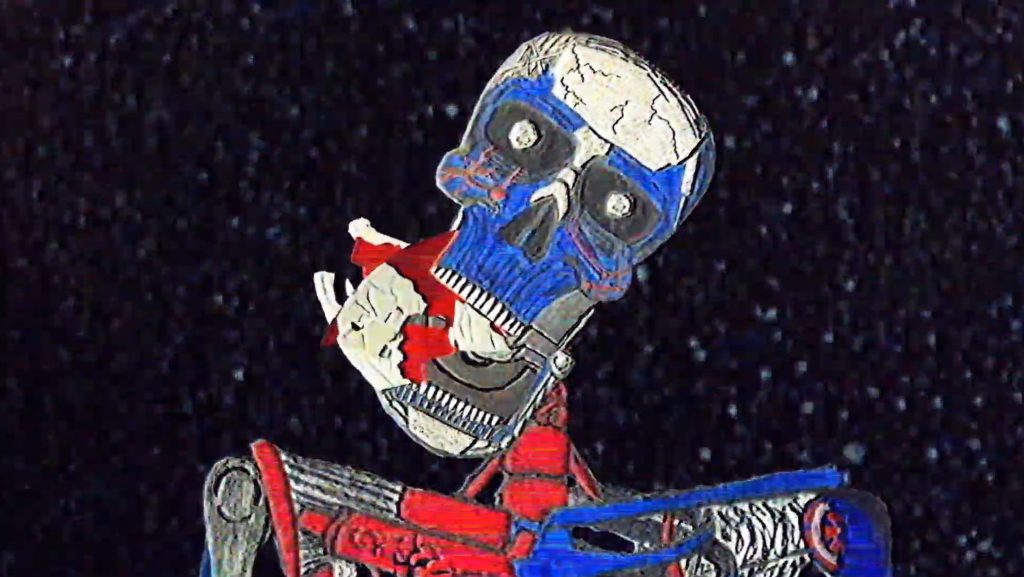
Visually, Void adopts an intentionally rough, handmade appearance. The animation resembles pencil drawings filled with felt-tip colours, creating something that feels closer to the pages of a sketchbook brought to life than a polished computer-generated production. Some viewers accustomed to major animation studios may find the artwork simplistic, but criticising the film for not resembling Pixar or DreamWorks would completely miss the point. This is clearly an independent labour of love, where creativity and perseverance take precedence over technical polish.
The film also applies VHS-style distortion and analogue video effects throughout, giving the impression of discovering a strange late-night animated feature playing on television during the 1980s. The retro presentation complements the surreal subject matter surprisingly well, adding another layer of personality to the project.
If there is one area where the film occasionally struggles, it is during sections of dialogue. Heavy vocal effects are used when the brothers converse, reinforcing their otherworldly nature, but they can sometimes make individual lines difficult to understand. The emotional intent remains clear, though certain exchanges require extra concentration to fully follow.
Musically, the film performs strongly. Composer Rob O’Hara provides a score that consistently enhances the scale of the story, lending genuine grandeur to the planetary battles and quieter moments alike. The soundtrack often makes the universe feel far larger than the animation alone could convey, helping create an atmosphere that is both epic and strangely melancholic.
Perhaps the most admirable aspect of Void is simply the amount of work required to bring it to life. Although the animation itself may appear deliberately simple, producing over eleven minutes of hand-crafted animation is no small achievement. Every movement, every background and every sequence represents countless hours of dedication, and that commitment is visible throughout the finished film.
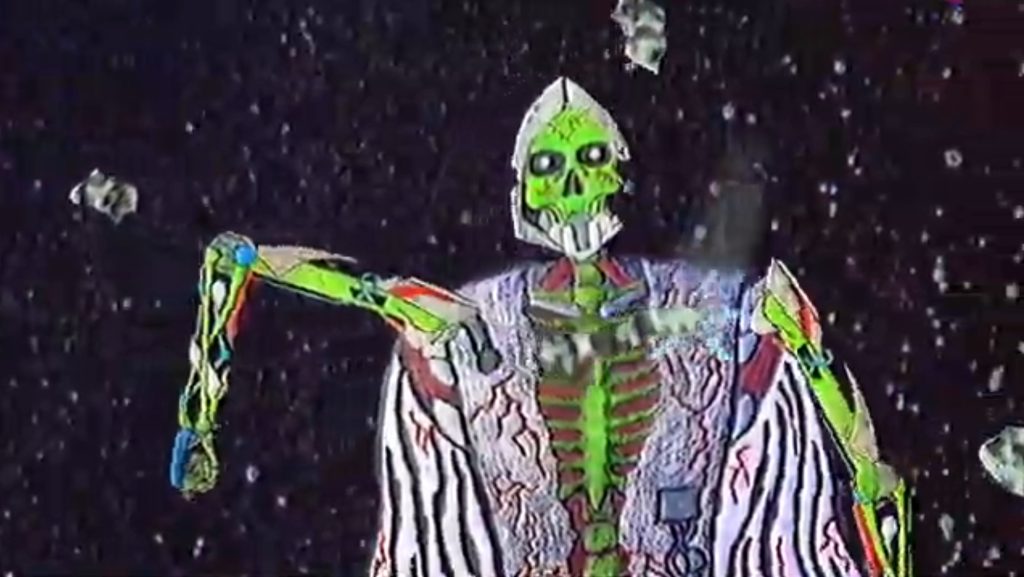
Void won’t revolutionise animation, nor is it trying to. Instead, it succeeds as an imaginative independent short built around a genuinely interesting concept and an admirable amount of passion. Its rough aesthetic becomes part of its identity, while its central story of two brothers wrestling with the morality of their own survival offers more substance than its modest appearance might initially suggest.
Roman Shattuck has created something refreshingly personal. It may not boast blockbuster production values, but it demonstrates exactly what independent filmmaking is often about: taking an original idea, pouring countless hours of hard work into it and bringing that vision to life. For that alone, Void deserves recognition, and despite its rough edges, it proves to be an enjoyable and surprisingly thoughtful animated short.
| Acting | |
| Direction | |
| Cinematography | |
| Writing | |
| Sound | |
| Screen Critix Rating |