
Social media has fundamentally changed the way people present themselves to the world. Every meal, relationship, shopping trip and emotional breakdown can now become content, carefully curated in the hope of attracting likes, followers and validation. Sombras Chinas (Chinese Shadows), the debut feature from Argentine filmmaker Sebaztian Baz, explores that obsession through one of the most original visual concepts to arrive at Screen Critix in quite some time. Presented entirely in a native 9:16 vertical aspect ratio, the film adopts the language of Instagram, TikTok and live streams to tell a surprisingly engaging satirical thriller.
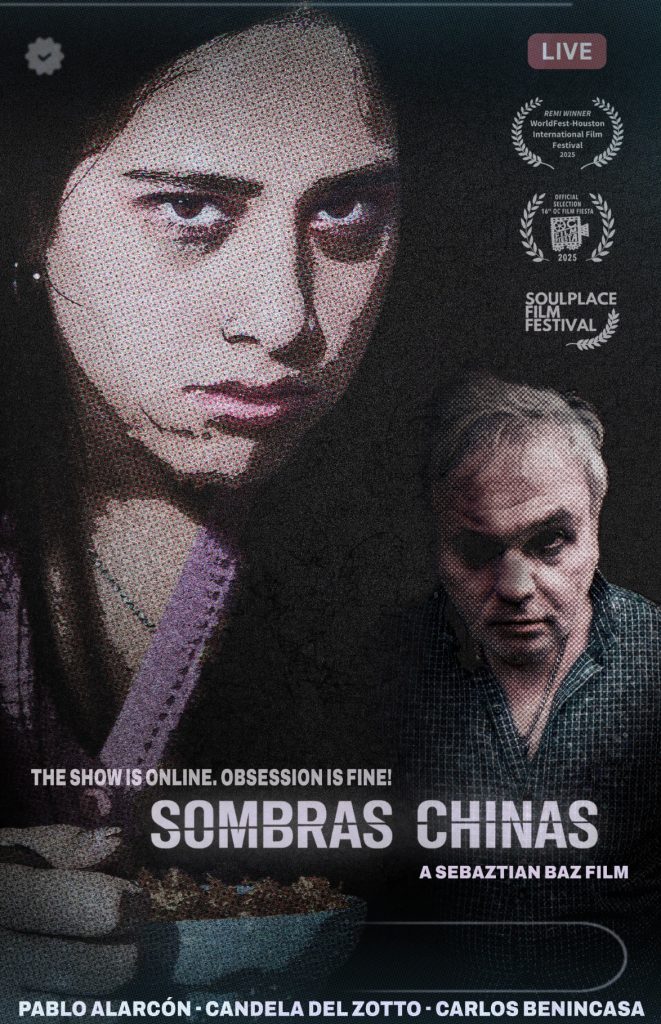
From its opening moments, it’s clear Baz is committed to his concept. Rather than simply using a vertical frame as a gimmick, the entire narrative unfolds through what appears to be social media content, livestreams, video messages and smartphone recordings. It’s a fascinating approach that initially feels unusual, but before long the format becomes completely natural, drawing viewers into a world where almost every moment of life is documented online.
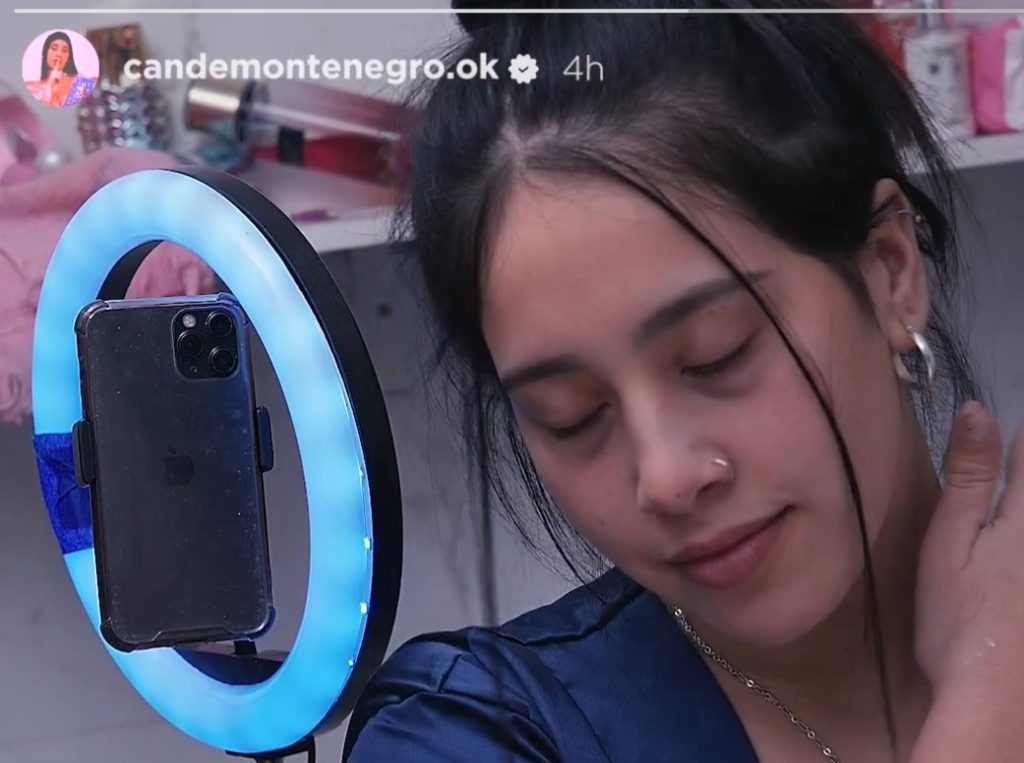
The story centres on Candela Montenegro (Candela Del Zotto), a young influencer whose life revolves around maintaining her online image. Whether she’s promoting clothing stores in exchange for free outfits, livestreaming mundane daily activities or carefully documenting nights out, everything becomes content for her followers. Along the way she is driven around Buenos Aires by the eccentric taxi driver El Polaco (Carlos Benincasa), who quickly becomes an unlikely confidant after revealing he once knew Candela’s aunt during his nightclub-owning days.
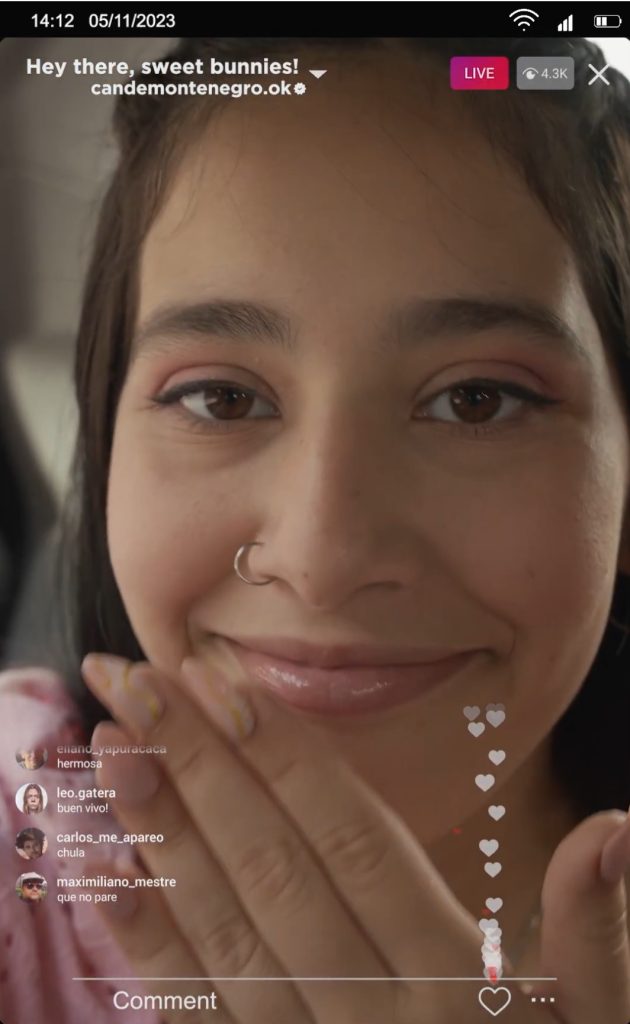
Life soon begins to unravel for Candela after her relationship with boyfriend Ramiro comes to an abrupt end. While she watches him apparently enjoying life through carefully selected social media posts, she struggles to cope with the breakup herself, exposing the difference between genuine emotion and the polished online personas people project. It’s a theme that runs throughout the entire film and remains one of its strongest ideas.
Sebaztian Baz deserves enormous credit for the originality of his filmmaking. We’ve seen films told through Zoom calls, computer screens and desktop interfaces before, but Sombras Chinas pushes the concept further by fully embracing the visual language of Instagram and modern social platforms. More importantly, it doesn’t simply imitate social media aesthetics for novelty. The vertical framing actually reinforces the film’s themes of performance, identity and constant self-exposure, making viewers feel as though they’re endlessly scrolling through someone else’s life.
Candela Del Zotto is excellent in the lead role. Perhaps the greatest compliment that can be paid to her performance is that she never feels like an actress playing an influencer. Instead, she completely convinces as someone whose entire existence revolves around followers, livestreams and online validation. Even during quieter moments, she captures the exhausting need to constantly perform for an invisible audience.

Carlos Benincasa also provides an engaging counterbalance as El Polaco. Older, more experienced and carrying secrets of his own, he offers Candela guidance while gradually drawing her into a mystery that shifts the film away from social satire and towards psychological thriller territory.
As Candela searches for her missing aunt, she discovers a locked wooden box containing both cash and a handgun, suggesting there’s far more to her family history than she ever realised. Without revealing too much, the mystery introduces a darker layer to the narrative that prevents the film from becoming simply a commentary on influencer culture. Instead, Baz successfully blends elements of thriller, satire and relationship drama into something that feels surprisingly distinctive.
Visually, the production makes impressive use of its modest budget. Shot over thirty days on location in Buenos Aires, the film demonstrates that creative ideas often matter more than expensive equipment. The vertical cinematography by Seba Sandoval consistently finds inventive compositions within the restricted frame, while Nicolás Fontimpe’s electronic score subtly heightens tension whenever the story begins moving into darker territory.
Where Sombras Chinas occasionally loses momentum is during its opening act. Considerable time is spent watching Candela and her fellow influencers livestream, shop, promote products and interact with followers before the central mystery fully emerges. While these scenes effectively establish the superficial world these characters inhabit, the narrative takes a little too long to reveal its larger plot, leaving the first half slower than it perhaps needs to be.
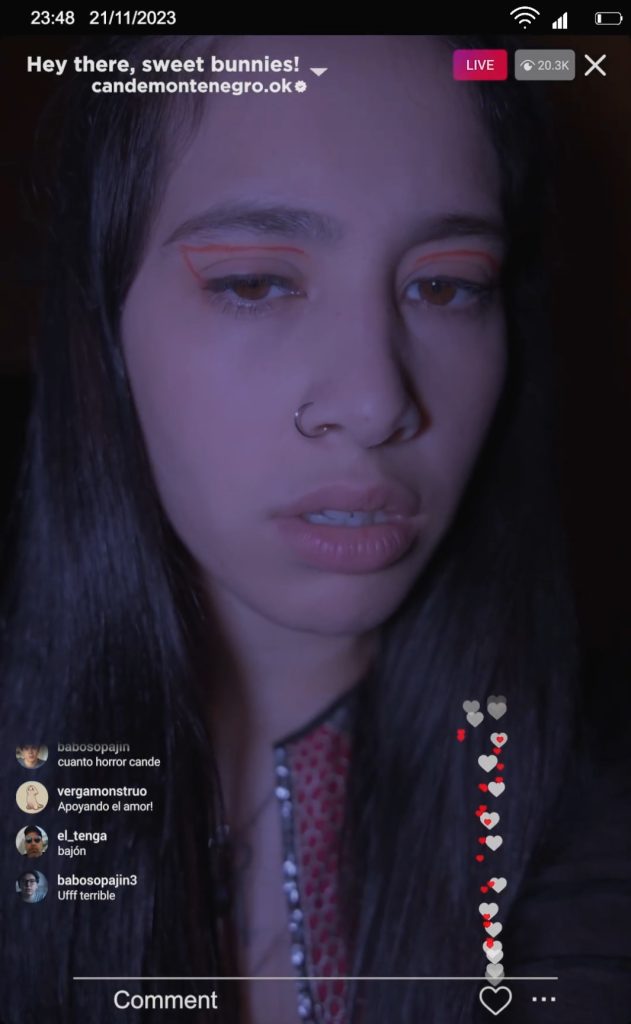
That said, those early sequences also serve an important purpose. Baz isn’t simply mocking influencers; he’s exploring how social media encourages people to construct idealised versions of themselves while real relationships quietly deteriorate in the background. The film’s satire feels recognisable without becoming heavy-handed, allowing audiences to draw their own conclusions about modern online culture.
One particularly effective sequence sees Candela searching through a room while the soundtrack repeatedly skips between the left and right audio channels, creating an unsettling sense of unease. It’s a simple sound design choice, but one that demonstrates Baz’s willingness to experiment beyond the film’s already unconventional visual presentation.
Considering this is Sebaztian Baz’s first feature, Sombras Chinas is an impressive debut. It won’t convert those who already dislike social media culture, and viewers who spend ninety minutes watching influencers livestreaming their lives may occasionally find themselves sharing the protagonist’s frustrations. However, behind that intentionally superficial surface lies an intelligent thriller about identity, obsession and the blurred line between real life and the versions of ourselves we choose to broadcast online.
Original, ambitious and confidently executed, Sombras Chinas proves that fresh ideas can still emerge from independent cinema. It occasionally takes its time getting where it’s going, but once its central mystery takes hold, this inventive Argentine thriller rewards viewers willing to experience storytelling from an entirely different perspective.
| Acting | |
| Direction | |
| Cinematography | |
| Writing | |
| Sound | |
| Screen Critix Rating |