
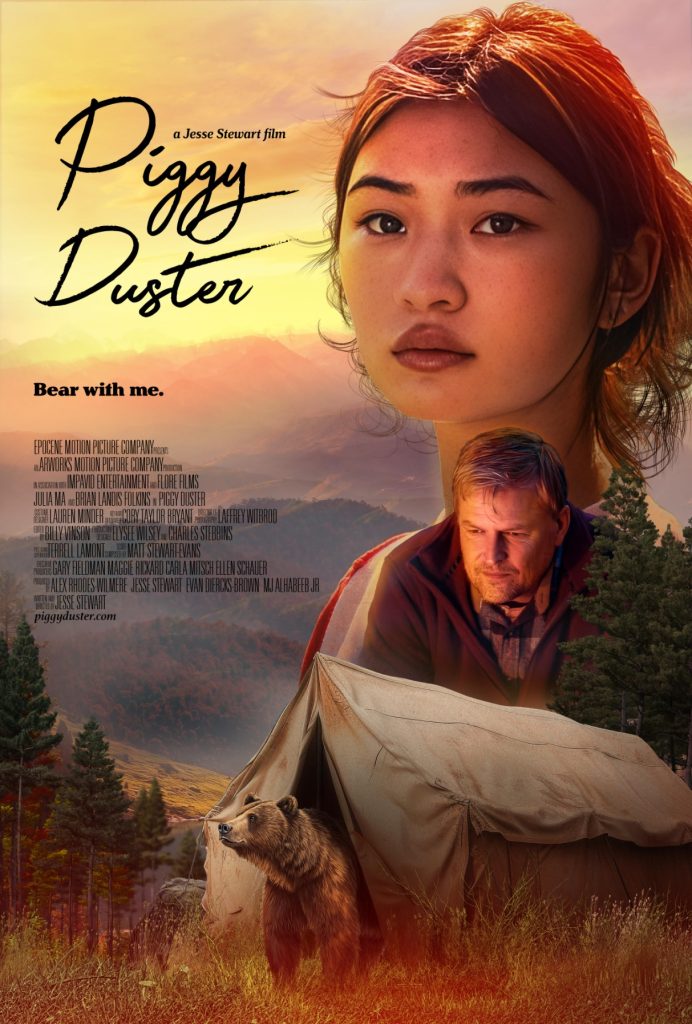
Some films rely on spectacle to capture an audience’s attention. Others simply place compelling characters into an honest situation and trust the performances and dialogue to do the rest. Piggy Duster, the feature debut from writer and director Jesse Stewart, confidently chooses the latter approach, delivering an intimate drama about family, communication and acceptance against one of the most beautiful natural backdrops you’ll see this year.
Set almost entirely within the Colorado Rockies, the ninety-minute drama follows teenager Vivian (Julia Ma) and her stepfather Keith (Brian Landis Folkins) as they embark on what may be their final annual camping trip together. For years, these wilderness excursions have been a family tradition, but Vivian has grown distant, and Keith hopes that five days away from the distractions of everyday life might help them reconnect.
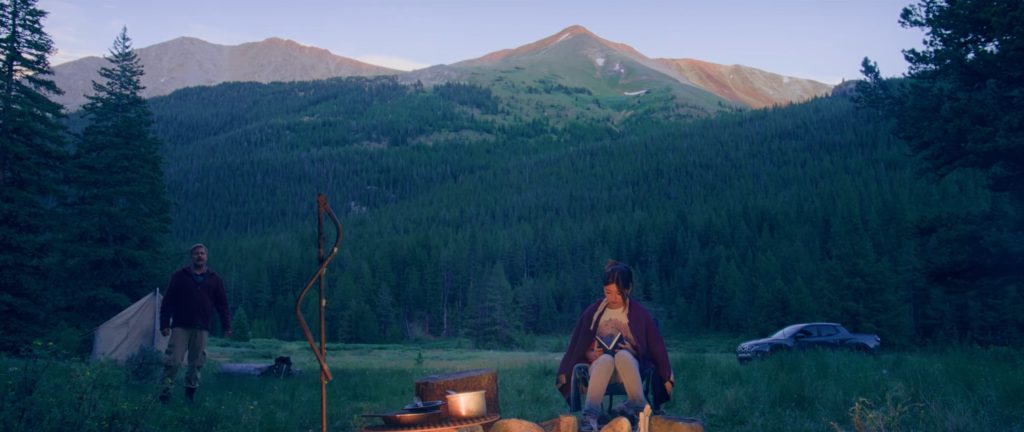
From the opening scenes, Piggy Duster establishes an atmosphere of remarkable tranquillity. Sunlight filters through towering woodland, streams gently wind through the landscape and crystal-clear water teems with tadpoles beneath the mountain peaks. Cinematographer Laffrey Witbrod captures the Rockies with stunning natural beauty, creating a setting that feels almost idyllic. The campsite itself, surrounded by forests and mountains, becomes as important to the story as either of its two central characters.
Fortunately, the film understands that beautiful scenery alone isn’t enough.
As a true two-hander, the success of Piggy Duster depends almost entirely on its dialogue, and Stewart’s screenplay delivers exactly what it needs to. Keith repeatedly searches for ways to break through Vivian’s emotional walls, asking about the poetry she’s writing, the book she’s reading and even whether she agrees with her mother’s opinion that his recently purchased truck is unnecessarily extravagant. Vivian, however, answers with little more than short replies before retreating back into her novel, determined to keep him at arm’s length.
It’s a simple dynamic, but an effective one. Keith believes Vivian never opens up to him, while Vivian quietly feels that Keith doesn’t truly listen when she does.
As the trip progresses, layers of their relationship gradually begin to unfold. Vivian reveals her ambition to win a poetry competition to help fund a scholarship to Peking University in Beijing, while Keith struggles to understand why she’d want to move halfway across the world. Eventually, he realises her decision has less to do with education and more to do with reconnecting with her biological father, whom she has secretly tracked down. Vivian still blames Keith for the breakdown of her family years earlier, a revelation that lands with genuine emotional weight.
The screenplay deserves considerable credit for allowing these conversations to develop naturally. Rather than relying on melodramatic confrontations, Stewart lets tension simmer through awkward silences, hesitant exchanges and small misunderstandings that gradually build into something much more affecting.
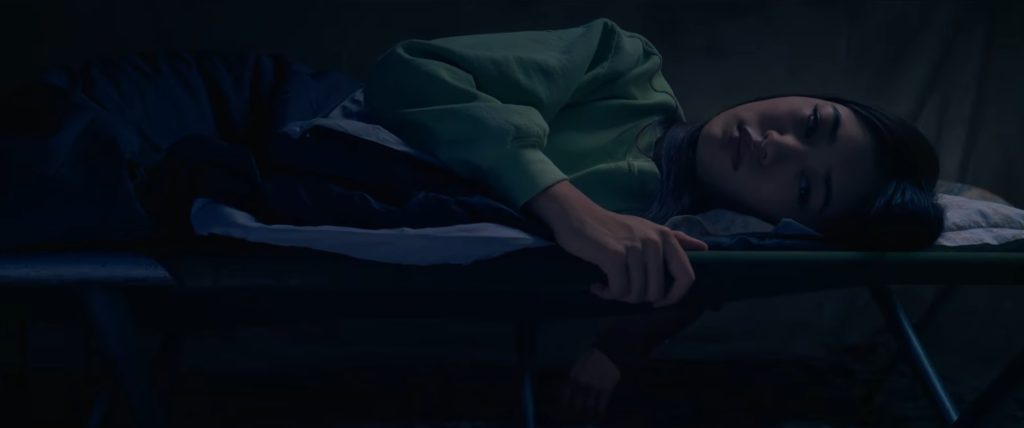
One particularly touching sequence arrives during a storm that forces the pair to shelter inside their tent. Vivian is struggling with period pain, and rather than treating the subject awkwardly or for comedic effect, Keith quietly offers her sanitary products and something to help ease her cramps. It’s a small moment, but one that speaks volumes about his character. Despite Vivian’s resentment towards him, Keith consistently demonstrates genuine care, reinforcing the film’s central idea that family isn’t always defined by blood.
Julia Ma and Brian Landis Folkins carry the entire film with remarkably believable performances. Their chemistry never feels forced, and it’s easy to accept them as a stepdaughter and stepfather navigating years of unresolved emotions. Ma captures Vivian’s mixture of frustration, vulnerability and independence without ever making the character unlikeable, while Folkins gives Keith a quiet warmth that makes his repeated attempts to reconnect feel sincere rather than overbearing.
The restrained approach extends throughout the production. Billy Vinson’s editing allows scenes to breathe naturally, while Matt Stewart-Evans’ understated score complements rather than overwhelms the emotional beats. Jesse Stewart’s direction also deserves praise for resisting the temptation to manufacture unnecessary drama, trusting both the actors and the screenplay to hold the audience’s attention.
Although a curious grizzly bear becomes an important part of the narrative, Piggy Duster is never really about external danger. Instead, it explores the emotional distance that can grow between people who genuinely care about one another but struggle to express it. Themes of identity, forgiveness, belonging and blended families are handled with maturity and compassion throughout.
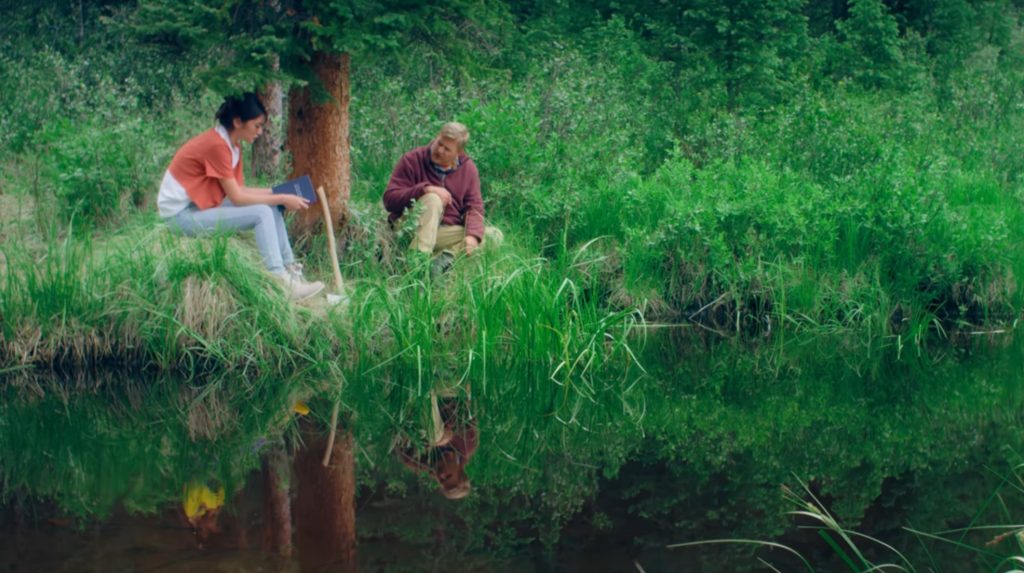
If there is a criticism, it’s that the deliberately measured pacing may test viewers expecting a more conventional drama. Stewart is in no hurry to reach emotional breakthroughs, allowing conversations to unfold in real time and frequently embracing silence. Those willing to settle into the film’s rhythm, however, will find those quieter moments among its greatest strengths.
At its heart, Piggy Duster is a thoughtful examination of family and communication. Beautifully photographed, superbly acted and anchored by an intelligent screenplay, it’s a reminder that some of the most rewarding dramas don’t require grand twists or elaborate set pieces. Sometimes all they need are two believable characters, an honest conversation and the courage to finally say what has remained unspoken for far too long.
| Acting | |
| Direction | |
| Cinematography | |
| Writing | |
| Sound | |
| Screen Critix Rating |
It is a fantastically orchestrated film and all the components blend so well together. Audio and visually balanced, with a smart and emotional charged script and real genuine characters. Always something new to appreciate with each viewing, and always plucks the heart strings. Everyone who sees it will long to grab a tent, a loved one, and head out to nature to have a ‘Piggy Duster’ !
Thanks for the very thoughtful and complete review of the film.