
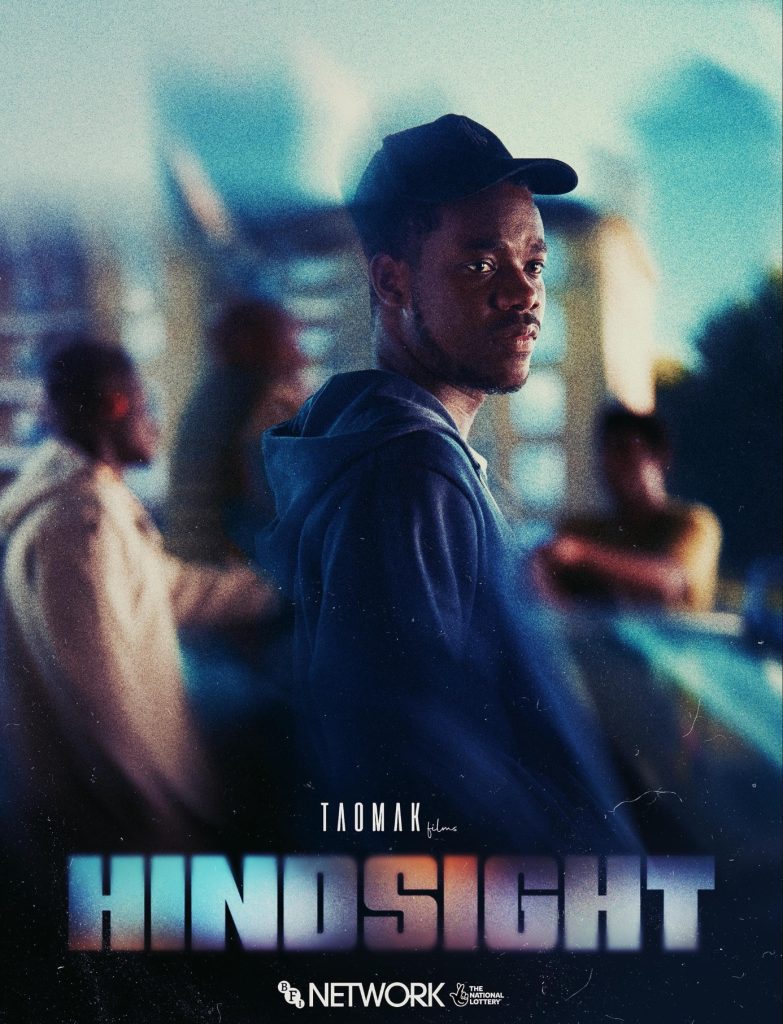
There is something special about a first car. It might be old, unreliable and destined to accumulate an alarming amount of rubbish, but for a young driver it can represent freedom in a way that few other possessions can. Suddenly there are places to go, friends to collect and experiences that no longer depend upon parents or public transport. Hindsight, an 11-minute British short from director Remi R.M. Moses, takes that familiar rite of passage and turns it into a funny, inventive and ultimately rather emotional coming-of-age story.
Written by Benjamin Sarpong-Broni, the film follows Jamal, played by Josh Tedeku, from the moment he buys his first car. His excitement is infectious as the previous owner hands over the keys and he drives away with an enormous smile on his face. Before long, Jamal is parked outside a block of flats adding fairy lights to the interior, already transforming a second-hand vehicle into something that belongs specifically to him.
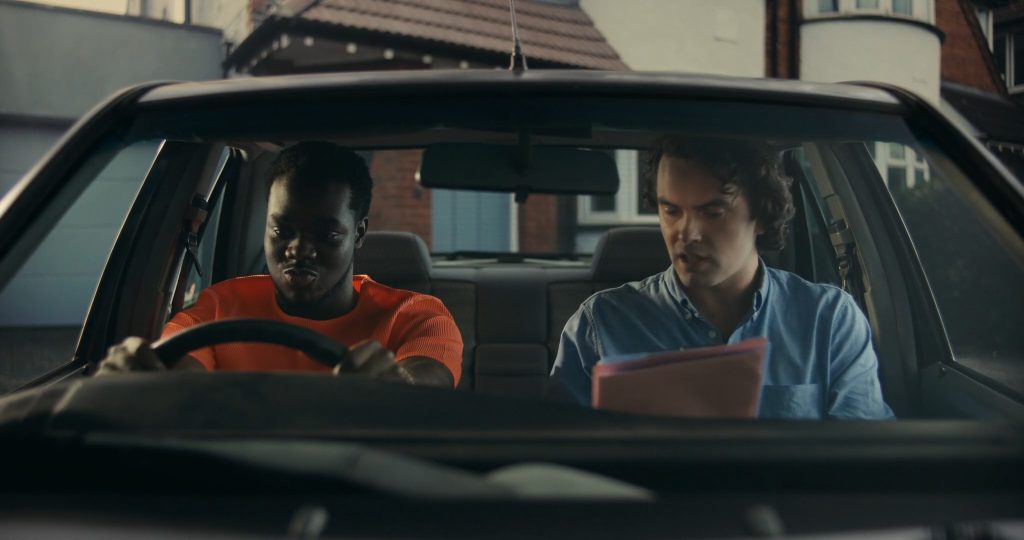
It is here that one of the most interesting elements of Hindsight becomes apparent. Cinematographer Fola Abatan’s camera looks into the car through the windscreen from a fixed position on the bonnet, and Moses commits to that perspective throughout the short. Rather than following Jamal and his friends wherever they go, the film allows their lives to pass in front of us from the car’s point of view.
It’s a simple idea, but an extremely effective one. The restriction could easily have become a gimmick, particularly across 11 minutes, yet Moses and Abatan find plenty of variety within the frame. More importantly, the decision gives the car a presence of its own. It isn’t merely a prop carrying the characters between scenes. It becomes the one constant as friendships, appearances and circumstances gradually change around it.
Jamal’s friends initially respond to the new arrival with exactly the enthusiasm you would expect. Having a mate with a car suddenly opens up possibilities, and the group pile inside before heading along the high street singing together to the music playing through the stereo. The energy of these early scenes establishes the friendship before the opening title has even appeared.
From there, Hindsight begins jumping through moments in Jamal’s life rather than constructing a conventional narrative around one particular event. The car receives a parking ticket. The friends travel to parties. They attempt, without much success, to chat up women. Jamal is also required to put his newfound independence to considerably less glamorous use when his mum needs him to make trips to the shops.
One of the recurring jokes concerns people telling Jamal that he resembles Arsenal and England footballer Bukayo Saka. It is the sort of joke that feels entirely at home among a group of friends who have spent enough time together to develop their own recurring observations and banter, and the natural performances help prevent those interactions from feeling overly scripted.
There is also an encounter with the police after one of the passengers apparently looks at an officer “funny” as they pass. These incidents don’t need to become individual stories because the point is the accumulation of them. We are effectively watching memories rather than a continuous adventure, with the windscreen acting almost like the frame of an old home movie.
Hindsight Finds Emotion in a First Car
What initially appears to be an energetic comedy gradually reveals what Moses and Sarpong-Broni are really interested in. Hindsight isn’t ultimately about owning a car. It is about that period of life when friendships can feel permanent, only for adulthood to quietly begin pulling everybody in different directions.
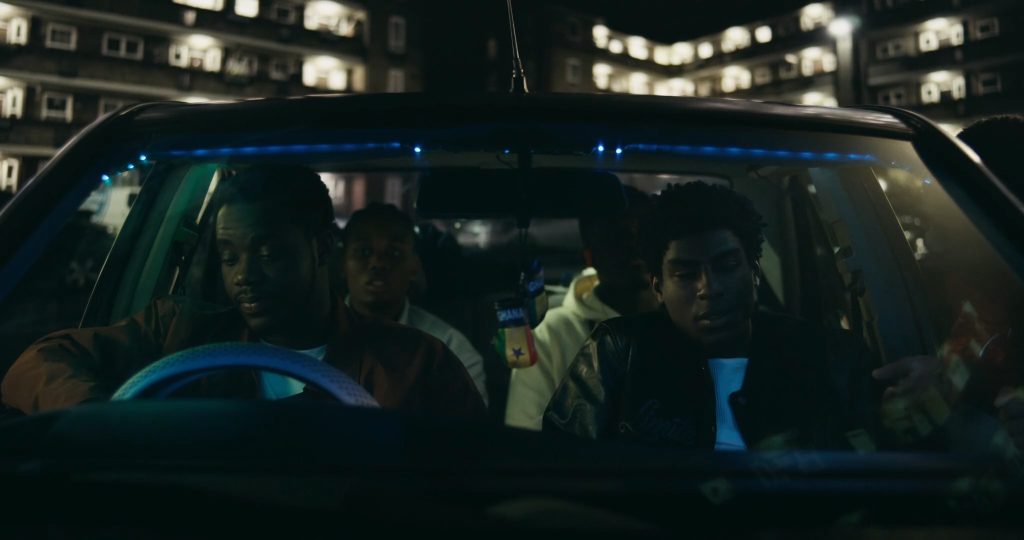
The passage of time is handled particularly well because the film doesn’t need to constantly tell us how many months or years have elapsed. The characters change slightly, but so does the vehicle around them. A small pair of Ghana boxing gloves appears hanging from the rear-view mirror before eventually being replaced by a cross. The pristine excitement Jamal once had about his first car also begins to disappear as the interior becomes increasingly untidy.
Burger wrappers, receipts, clothes, empty bottles and other rubbish begin accumulating around the cabin and dashboard. What was once something Jamal couldn’t wait to personalise and show his friends gradually becomes another ageing possession that isn’t being particularly well cared for. The physical deterioration of the car mirrors the changes happening within the friendship group without the film having to explain the comparison to us.
That is where the fixed-camera concept becomes much more than an interesting visual experiment. Because our perspective never abandons the car, we notice who is sitting inside it and, increasingly, who isn’t. Friends who once seemed delighted by the opportunity for a lift gradually stop appearing. The novelty has gone, the vehicle is getting older and mechanical problems begin to make it more of a burden than a symbol of freedom.
Jamal continues trying to arrange time with his friends and offers lifts, but those invitations no longer generate the enthusiasm they once did. The loneliness creeps into the film almost unnoticed. A space that was initially filled with voices, music, laughter and bodies becomes quieter, and the contrast is surprisingly affecting.
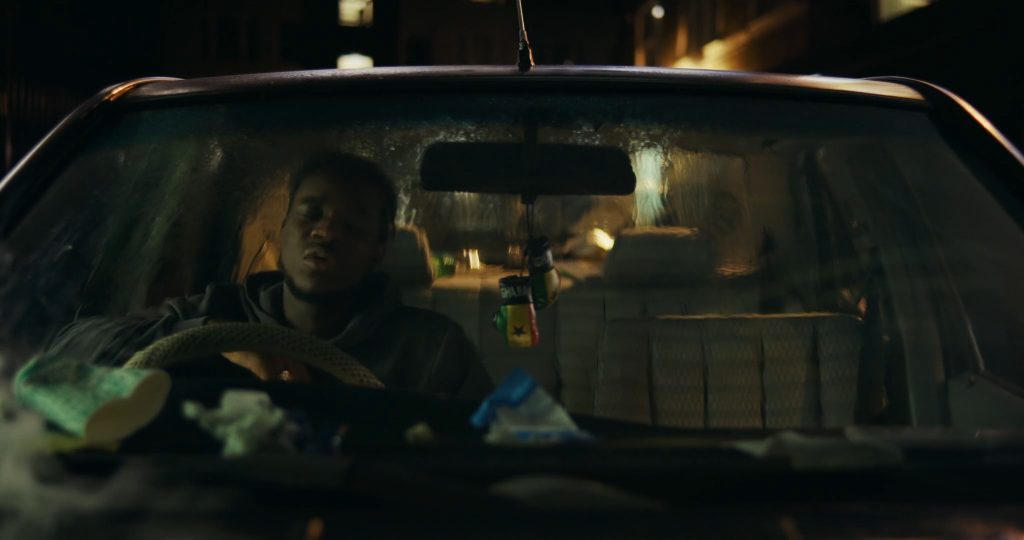
Josh Tedeku handles that tonal transition extremely well. The huge grin of the young man receiving his first set of car keys gives way to somebody beginning to understand that the period represented by the vehicle is ending. Tedeku never needs to force the emotion because the film has already shown us everything Jamal is gradually losing.
The wider ensemble deserves plenty of credit too. Jude Carmichael, Joshua-Alexander Williams, Denzel Baidoo and Kola Bodunde are among the cast surrounding Tedeku, and the group interactions have an easy, natural quality. Nothing feels as though performers are waiting for their turn to deliver a punchline. Their conversations have the overlapping energy and familiarity of people who genuinely spend large amounts of time together.
That naturalism is crucial because Hindsight is asking us to believe in years of friendship within a very short running time. If those early scenes didn’t convince us that these people genuinely enjoyed being together, their gradual separation wouldn’t carry anywhere near the same emotional weight.
Eventually Jamal decides to sell the car. Before it goes, however, he is asked for one final trip by a friend heading to the football. They stop for food along the way and, for a brief period, the old atmosphere returns. The car once again contains friendship, conversation and the sense of possibility that defined its earlier years.
It doesn’t last, which is precisely why the sequence works. His friend eventually leaves and Jamal is once again confronted with the reality that it is time to let the car go. Moses avoids turning the moment into excessive sentimentality because he doesn’t need to. We have spent the entire film watching the history contained within that vehicle.
Editor Casey Wong deserves particular credit for making the structure work. With the camera maintaining the same fundamental viewpoint, editing becomes essential in establishing rhythm and communicating the passing of time. The changing passengers, clothes, objects and condition of the interior allow the film to move across a significant period without losing the audience.
Sound is equally important when the visual perspective is deliberately restricted. Jake Fielding is credited as sound designer, with Oihenart Garai and Cal Graham working in the sound department. Music, conversation and the changing atmosphere within the car help individual moments feel distinct even though we repeatedly return to the same basic composition.
Moses’ decision to impose such a strong visual rule on the film is perhaps its greatest achievement. We have seen countless coming-of-age stories about friendships changing as people grow older, and the first-car experience is hardly unfamiliar territory either. Hindsight finds a genuinely distinctive way of presenting both.
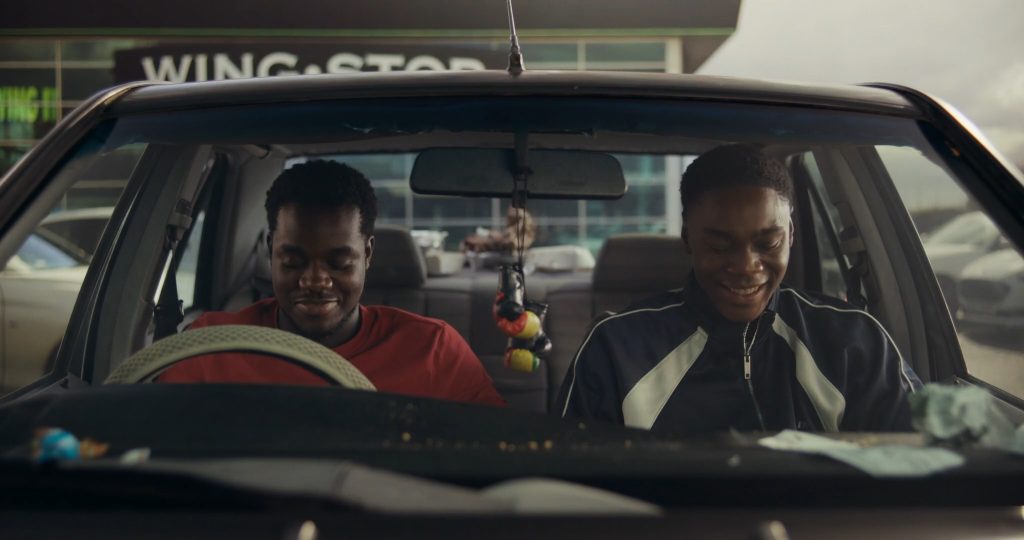
There is something quietly beautiful about watching the car remain while everything else changes. People enter, people leave, decorations appear and disappear, rubbish accumulates, relationships drift and eventually the vehicle itself passes on. An object that initially represented the beginning of Jamal’s independence becomes a container for memories of a period he can no longer recreate.
The film’s impressive festival journey, including selections at the BFI London Film Festival, Rhode Island Flickers Film Festival, S.O.U.L. Fest, Bolton Film Festival, Dinard British & Irish Film Festival, Norwich Film Festival and Leeds Film Festival, is understandable. There is a strong concept here, but importantly there is also genuine emotion beneath it.
Moses, a graduate of the London Film School, has created a short that feels carefully considered without becoming overly calculated. The technical concept serves the characters rather than the other way around, and that distinction is important. Remove the unusual camera position and there is still a relatable story about friendship, independence and discovering that growing up sometimes means accepting that people who once seemed permanently attached to your life are beginning to move elsewhere.
Hindsight is funny, warm and unexpectedly moving. Fola Abatan’s cinematography turns the windscreen into a window onto several years of Jamal’s life, while Casey Wong’s editing and an excellent ensemble of natural performances allow those years to pass convincingly in just a few minutes. What starts with the excitement of getting the keys to a first car gradually becomes something much more reflective.
Most impressively, the film achieves all of this in around 11 minutes. The car gets older, Jamal gets older and friendships that once filled every seat begin to change. By the time those keys are ready to pass to somebody else, Hindsight has transformed an ordinary first car into a record of a particular period in someone’s life. It’s a wonderfully inventive way of telling a familiar coming-of-age story, and one that we thoroughly enjoyed.
| Acting | |
| Direction | |
| Cinematography | |
| Writing | |
| Sound | |
| Screen Critix Rating |