
An entirely dialogue-free, experimental feature film that follows two separate stories across nine distinct chapters that trace the hazy glow of childhood memories all the way up to the harsh light of adulthood. This is Where The Merrows Roam.
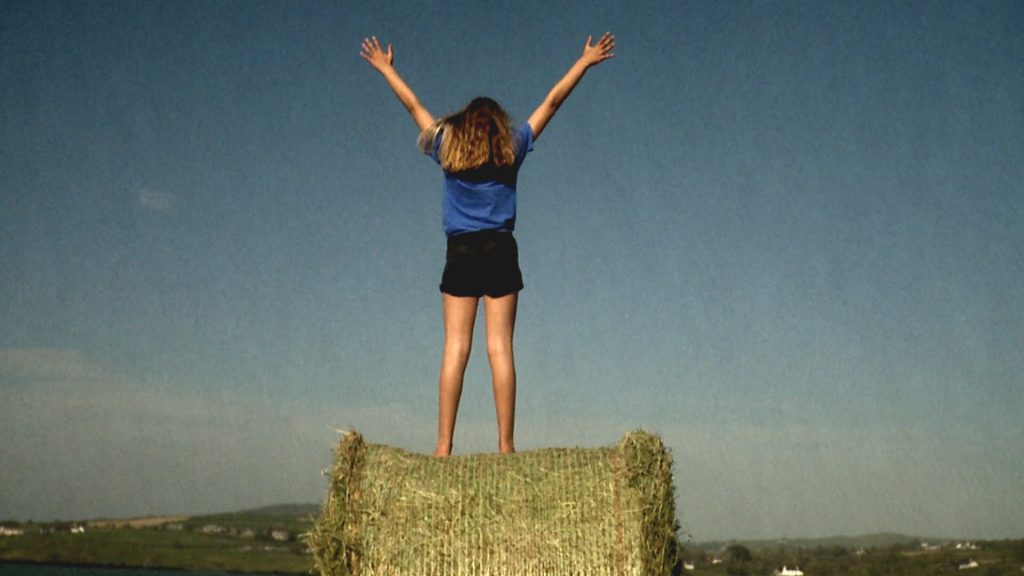
A Merrow, we are told in the opening graphic, is the name given to a mermaid or a merman from Irish mythology and when I first read it I was immediately reminded of the Neil Jordan, and Colin Farrell film Ondine from 2009. Written and directed by the usually brilliant Jordan, Ondine was an underwhelming piece of Irish whimsy that saw Farrell’s alcoholic Irish fisherman catch a beautiful girl in his net.
Ondine was a pretty forgetful comic fantasy but Colin Hickey’s Where The Merrows Roam is an altogether different beast that proves to be a beautiful and often haunting piece of film-making even though it has very little, if anything at all, to do with mermaids.
Containing only a couple of what you would call main characters, Where The Merrows Roam is a collection of dreamy and somewhat hypnotic images that combines whirling fast-cut montages and sudden stillness to provide the drama. In fact, it could essentially be classed as a silent film if it were not for the constant use of sound effects and the brilliant ever-fluctuating soundtrack by Pipe Gaitan that changes styles and rhythms along with the visuals we see.

Where The Merrows Roam is much like a painted tapestry that weaves its way through different landscapes and moments, it is a film of huge ambition and yet abject humility. Its dialogue-free story allows the viewer to drink in the visuals and relate to the characters. The scenes portray a childhood that seems so far away and yet at the same time so very familiar.
On our journey, we meet bike-riding children, daydreaming teenagers, and hard-working men and women. The cinematography allows each of these moments to be given as much importance as the last. Be that a pot of paint, an urban walkway, a rusted piece of metal, a bubbling seashore, a dead animal, or a close-up of a human face. The vibrant colours of the more rural areas mix well with the dull greyness of the urban areas. The quick edits don’t allow you to spend much time analysing each scene as they flick and skim between different images. This directorial choice is just as well because, although many of the images will mean nothing at all, there is just enough time spent on them to make you think that they do.
If there is one flaw with the film, it is actually to do with one of its major strengths and that is the lack of dialogue. We see a lot of interesting characters in the 54-minute run time who seem to just sit silently and contemplate their lives. While these moments are in themselves quiet and beautiful, I would have personally liked to hear more about their thoughts, their hopes, their ambitions. While the silence from them is always calming and ethereal it is hard to care too much about them as we never get to know how they are truly feeling. Are they happy? Are they sad? Are they hopeful or are they content? Definitive answers to these questions either through dialogue or meaningful scenes would help the film to hit even harder. As it stands, we get a lot of gorgeous photography and close-ups that sometimes lack substance.

That said Colin Hickey has created a fascinating film showing a boldness of vision that you can trace right through to some of the truly great film directors. As writer/director/cinematographer, and editor, Hickey shows a genuinely strong talent that will be difficult to match from a visionary point of view, but when he manages to create a narrative or a script that is as strong as his visuals. He may very well be able to create a true masterpiece. This was close.