
There is something quietly sobering about watching Mr. Wonderful, knowing it stands as Michael Madsen’s final leading role before his death on July 3, 2025, aged 67. Not in a flashy “one last ride” way, either. More in the way the film allows him to simply exist on screen for two hours as a weary, complicated man whose life is creaking at the seams.
Madsen plays Professor Brian Fenton, a long time lecturer in California who is, bluntly, running out of road. His career feels stalled, his relationship with alcohol is not exactly a casual hobby, and his students are starting to push back against a man who teaches like he is trying to win an argument with the concept of enthusiasm itself. The early scenes lean into that particular brand of academic burnout where every lecture feels like it is being delivered through gritted teeth and a throat full of gravel. Madsen’s voice, famously deep and raspy, becomes part of the character’s texture. Brian sounds like a man who has been swallowing disappointment for years and it finally started scratching on the way down.
Then life, as it often does, decides to show up with a crowbar.
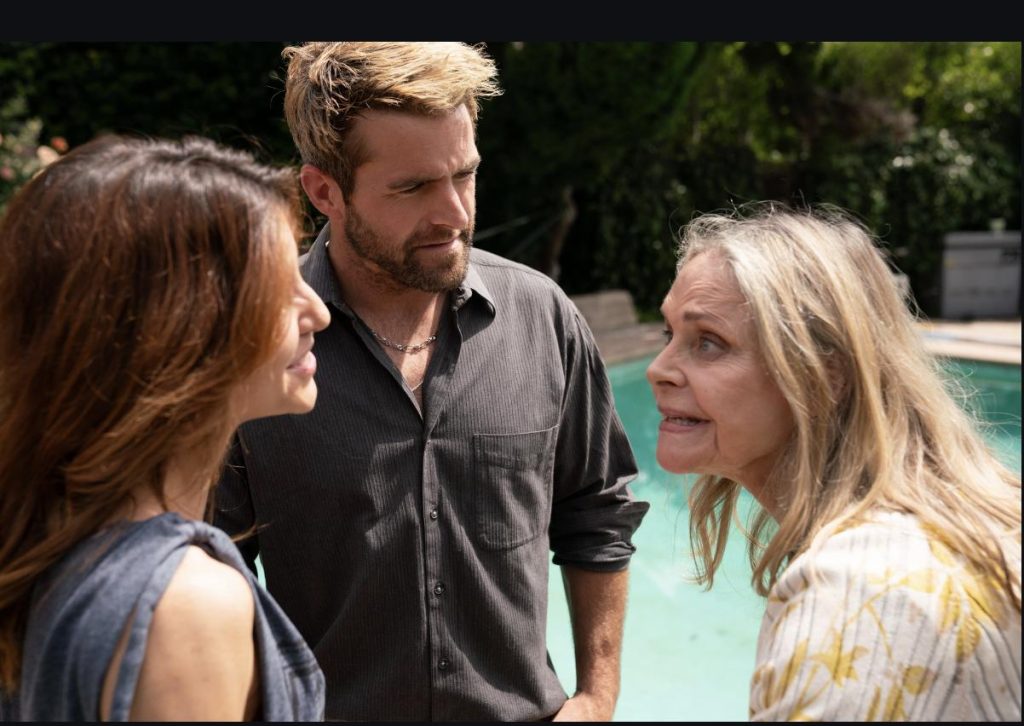
Brian’s adult son Danny, played by Robert Laenen, appears on the doorstep carrying chaos like it is hand luggage. Danny is on the run from his own mess, including a relationship that has curdled and trouble that feels financial, criminal, and entirely self inflicted. He is one of those characters who can turn a calm room into a headache just by entering it. The film does not try to make Danny effortlessly likeable, and that is probably the point. He is exhausting. He is impulsive. He is the kind of person who says he is going to sort his life out right after one last stupid decision.
Brian’s wife Corinne, played by Kate Hodge, becomes the immediate pressure gauge for all of this. She is supportive, patient, and practical, but not endlessly elastic. The dynamic between the three works because it feels recognisable. This is not a movie family who communicate in neat monologues. It is a family unit trying to survive proximity.
Michael Madsen Carries Mr. Wonderful
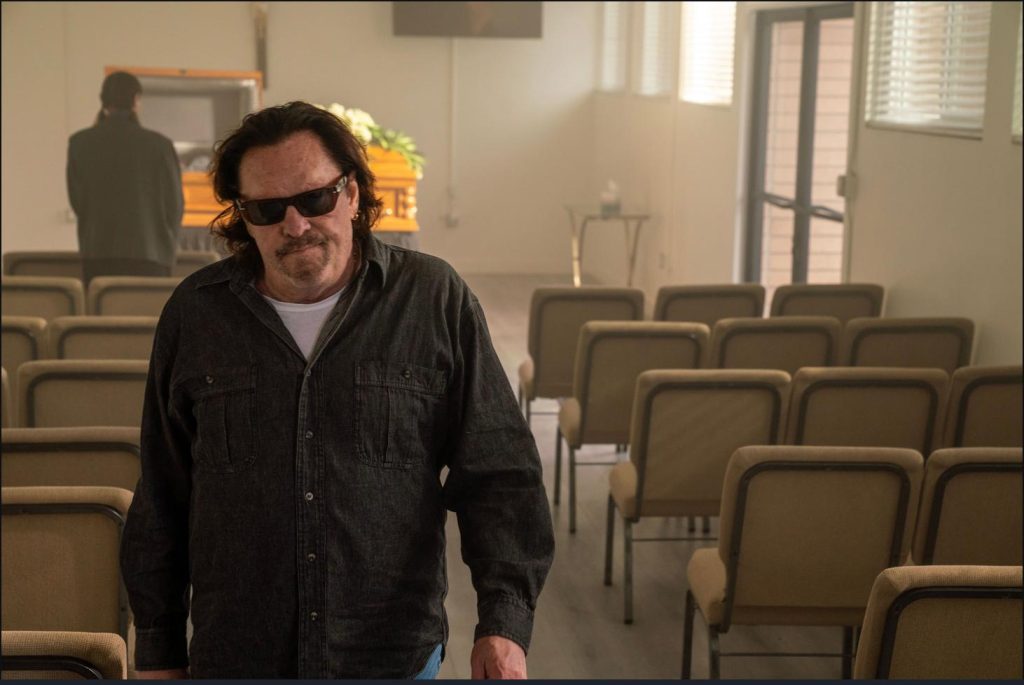
If Mr. Wonderful has a centre of gravity, it is Madsen. Even when the script wanders or when scenes play a little more broadly than they should, he keeps pulling the film back toward something human. His Brian is a man with a short temper for nonsense, but also a man who cannot stop caring, even when caring clearly hurts him. He can be sour and strangely funny in the same breath, the kind of humour that is less about jokes and more about a defensive reflex.
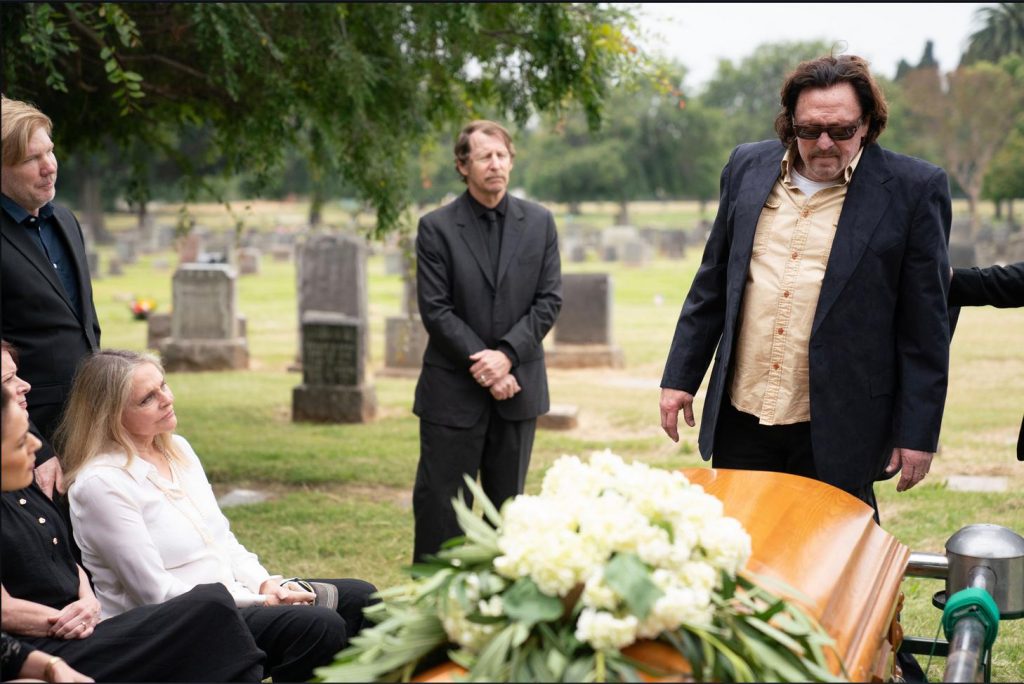
The film’s other major thread involves Brian’s father, Robert, played by Robert Miano, whose dementia is worsening. Priscilla Barnes plays Claire, Robert’s wife, and these sections of the film introduce a different emotional temperature. Where the California scenes often play like stress comedy with teeth, the Texas storyline carries a heaviness that lands. Dementia is not used here as a quick tragedy shortcut. It is depicted as a slow, frightening erosion, not just for the person experiencing it, but for everyone orbiting them.
What works best is how these storylines collide. Brian is already struggling to keep himself upright and then he is asked to be a father, a husband, and a son, all at once, while also pretending he has not been quietly unraveling for years. That is the film’s most truthful idea: sometimes it is not one catastrophe that breaks you, it is three medium sized ones arriving on the same morning.

The direction from Mark David is straightforward and functional. This is not a film chasing visual fireworks. It is staged like an indie drama that prioritises performance and dialogue, sometimes to its own detriment. There are moments where you can feel the low budget limitations, particularly in how scenes are blocked and how certain confrontations are framed. Still, the simplicity also suits the material at times, because this story is not really about plot mechanics. It is about people grinding against each other in confined spaces, emotionally and literally.
The script, written by Daniel Blake Smith and adapted from his novel, has strong character intentions even when the dialogue can occasionally drift into the obvious. Some supporting characters feel lightly sketched, and a few developments land more because the actors push them over the finish line than because the screenplay built a perfect runway. But the film keeps you watching, largely because it is anchored by a lead performance that feels lived in.
By the time Mr. Wonderful wraps up, you may not feel like every thread has been tied into a neat bow. In a way, that fits. Life rarely resolves itself cleanly, and this film is more interested in the ache of trying than the fantasy of fixing everything.
And for Madsen, it is a fitting final lead role: not a victory lap, not a self parody, but a grounded, bruised performance that reminds you what he could do when a film gave him room to just be a person.
| Acting | |
| Direction | |
| Cinematography | |
| Writing | |
| Sound | |
| Screen Critix Rating |