
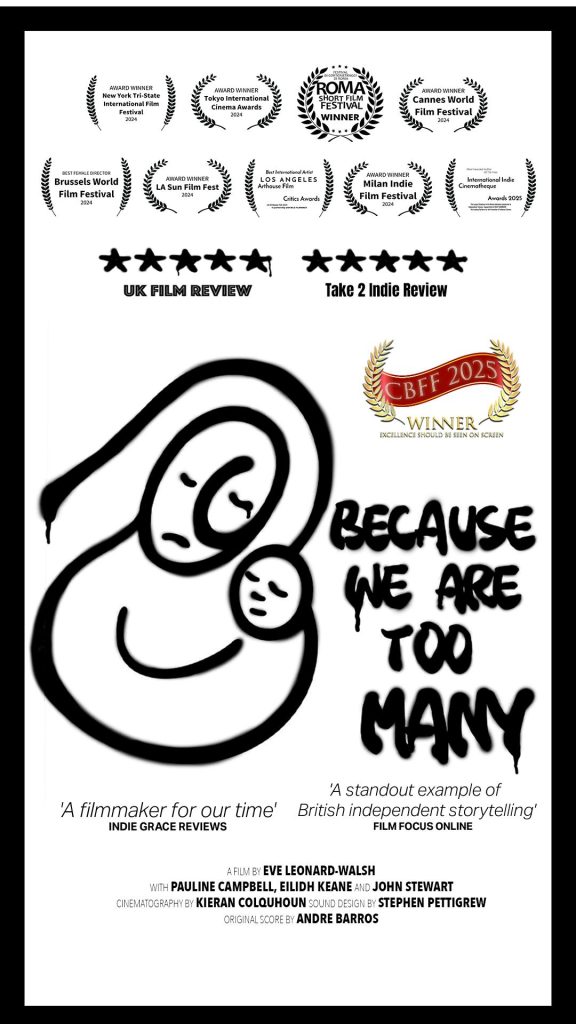
Because We Are Too Many opens with distorted imagery, soft focus visuals and quiet messages that appear before the credits, immediately signalling that this is not a conventional drama. From the very first frames, writer, director and lead actor Eve Leonard-Walsh establishes a deliberate artistic tone that reflects the emotional state of the story’s central character and the wider world it inhabits.
Set and shot in Glasgow during the COVID-19 pandemic, the film follows Morgan (Eve Leonard-Walsh), a single mother trying to raise her autistic son Ronan, played by Leonard-Walsh’s real-life son Ronin Leonard-Walsh, while navigating isolation, financial hardship and a severe lack of support. The deserted streets, masked figures and eerily quiet environments are not just aesthetic choices but an authentic reflection of a very real moment in recent history. The pandemic backdrop is not treated as a gimmick. Instead, it is woven directly into the narrative as a lived experience that amplifies Morgan’s struggles as a caregiver.

What makes the film particularly affecting is its grounding in realism. Morgan is not portrayed as a flawless hero figure, but as a tired, overwhelmed parent doing her best under extraordinary pressure. Her internal monologues reveal exhaustion, despair and resilience in equal measure, especially when she speaks about the repetitive nature of her daily life while still pushing forward for her son’s sake. The bond between Morgan and Ronan is portrayed with remarkable authenticity, largely because of the natural chemistry between Leonard-Walsh and her son. Their interactions often rely on body language, proximity and silence rather than lengthy dialogue, which makes their relationship feel genuine rather than overly dramatized.
Because We Are Too Many also adopts a non-linear structure, frequently shifting between Morgan’s present struggles and her past. Younger versions of Morgan, portrayed by Eilidh Keane and Hope Hill, provide vital insight into the character’s upbringing and the experiences that shaped her adulthood. These flashbacks explore a troubled childhood marked by instability at home, difficult school experiences and a formative friendship with a quiet boy named Mo, played by Henry-Hilson Agbangbe. Their wordless connection becomes a subtle emotional anchor that echoes later in Morgan’s relationship with her own son, creating a thoughtful generational parallel.
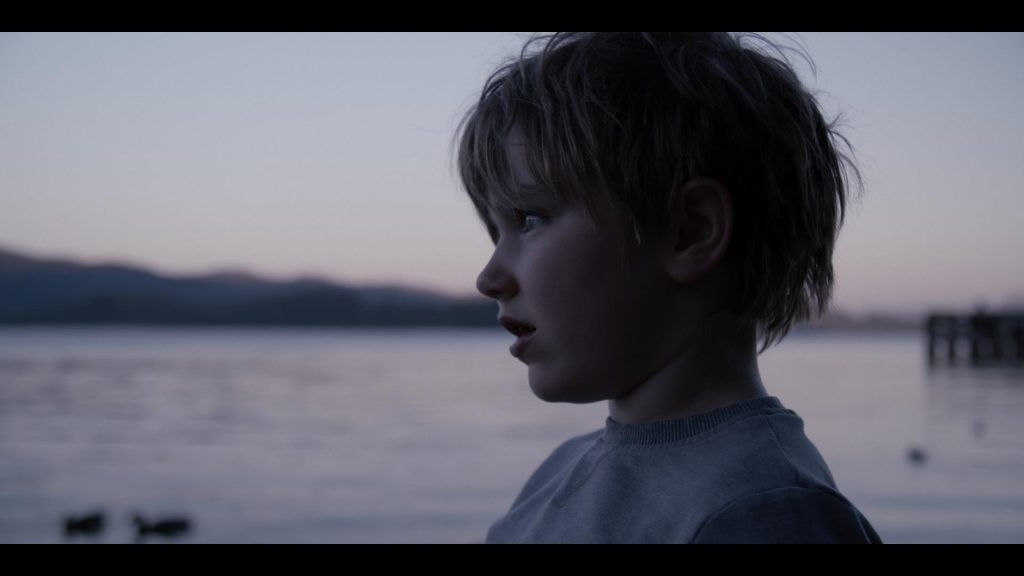
Visually, the film leans heavily into desaturated colours, heavy contrast and shadowy interiors. Cinematographer Kieran Colquhoun captures Glasgow as a city full of character yet stripped of life during lockdown, with empty streets and grey architecture reinforcing the sense of isolation. The aesthetic is intentionally bleak, mirroring Morgan’s mental state and the oppressive weight of her circumstances. While some scenes rely heavily on close-ups and medium close-ups, this choice often feels intentional, keeping the audience emotionally locked into Morgan’s perspective rather than presenting a broader, detached view of events.
Leonard-Walsh’s direction is deeply personal and focused. By writing, directing and starring in Because We Are Too Many, she brings a clear sense of authorship to the project. The storytelling feels intimate rather than theatrical, and the emotional beats are handled with restraint instead of melodrama. Pauline Campbell delivers a particularly strong performance as Morgan’s mother, adding depth to the generational themes explored throughout the narrative. Her presence in the flashback sequences helps contextualise Morgan’s upbringing and highlights how cycles of hardship can shape a person’s future.
Beyond its character study, the film also critiques systemic shortcomings, particularly the lack of adequate support for parents raising children with additional needs. Scenes involving social services, benefits systems and limited external assistance underline how easily vulnerable families can fall through institutional gaps, especially during a global crisis. The script does not over-explain these issues, instead allowing situations and environments to communicate the realities Morgan faces on a daily basis.
The score is used sparingly and effectively, allowing silence and ambient sound to carry emotional weight. This minimalist approach enhances the immersive quality of the film, making moments of stillness feel heavy rather than empty. Combined with the subdued visual palette, the sound design contributes to an atmosphere that is quietly haunting without ever becoming sensationalised.
Because We Are Too Many – A Strong Scottish Indie
Because We Are Too Many is not a film designed for easy viewing. Its themes of isolation, trauma, caregiving and poverty are handled with honesty and seriousness, and the emotional tone remains consistent throughout. However, this commitment to authenticity is also the film’s greatest strength. It never feels exploitative or exaggerated. Instead, it offers a sincere and deeply human portrait of motherhood under extreme circumstances.
As an independent British drama, the film demonstrates impressive ambition in both structure and subject matter. Balancing timelines, personal history and present-day hardship is no small feat, yet Leonard-Walsh manages to keep the narrative cohesive and emotionally engaging. The decision to centre the story around lived experience gives the film a level of emotional credibility that many larger productions struggle to achieve.
Ultimately, Because We Are Too Many stands as a powerful and deeply personal piece of filmmaking. It is a reflective drama about resilience, caregiving and survival during one of the most challenging periods in recent history. Through its grounded performances, authentic setting and thoughtful storytelling, it delivers an emotionally resonant experience that lingers long after the credits roll. You can catch the film yourself on Amazon Prime.
| Acting | |
| Direction | |
| Cinematography | |
| Writing | |
| Sound | |
| Screen Critix Rating |