
It was probably only a matter of time before someone turned pickleball into a feature film, and Jeff Hamm’s Pickleball: The Movie embraces that idea with a broad, light hearted sports comedy that clearly knows exactly what it is aiming to be.
Set around a local community centre, the film introduces us to a group of regulars who spend their time lifting weights, attending aerobics classes, and, of course, playing pickleball. Early on, during a casual game, tragedy strikes when Barry Thompson suffers a heart attack and passes away. It is a surprisingly abrupt moment that sets the rest of the story in motion.
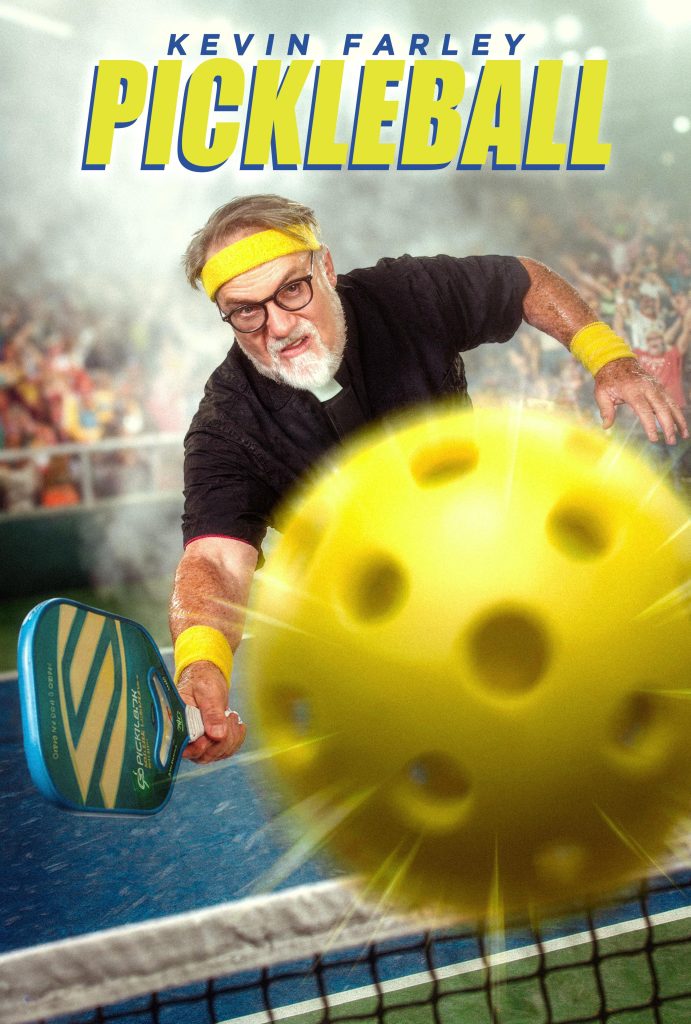
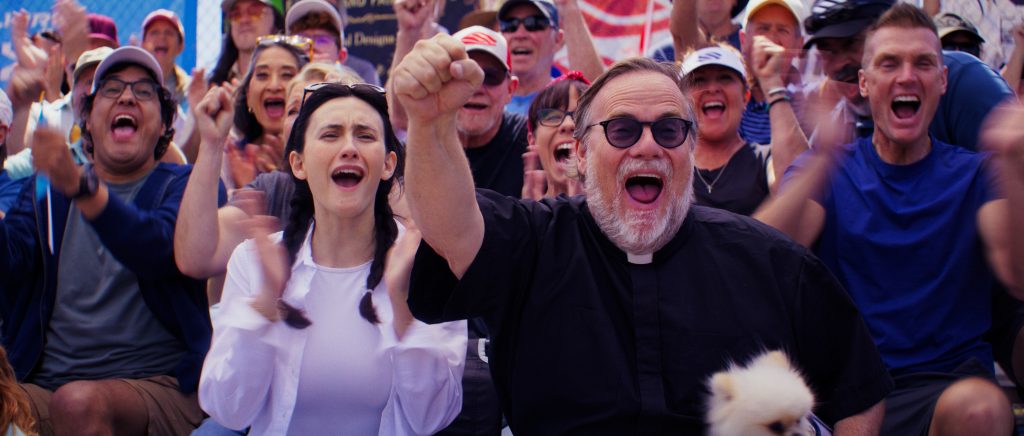
Barry’s will reading quickly establishes the central conflict. His belongings are split between his sons, Miles and Earl, and his close friend Father Joseph, played by Kevin P. Farley, who inherits Barry’s dog and truck. Left out entirely is Daisy, Barry’s partner, who does not take the news well. Her reaction plants the seeds for the film’s antagonist, with Daisy positioning herself against both the family and the community centre.
Things take a slightly unusual turn when Father Joseph is visited by Barry’s spirit, or possibly an angelic version of him, urging him to help keep the centre alive and guide his sons. From there, the film shifts into familiar territory. With the centre under threat and morale low, Father Joseph convinces Miles and Earl to step in and help run things, including organising events like bingo nights and building interest around pickleball.
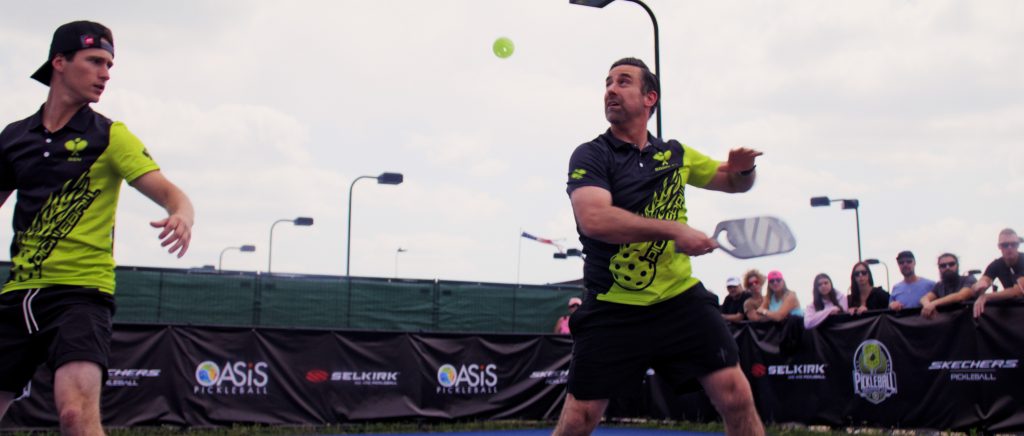
The narrative finds its main drive when a high stakes pickleball tournament is announced, offering a $100,000 prize. Naturally, this becomes the centrepiece of the film, with Father Joseph and the brothers assembling a team, Solomons Porch, to compete. At the same time, Daisy emerges as a rival force, backing the opposition and attempting to use the tournament to claim what she believes should have been hers.
If this setup sounds familiar, it is because Pickleball: The Movie follows a structure very similar to other underdog sports comedies, most notably Dodgeball. There is the struggling group, the overconfident rival team, and the big tournament that brings everything together. It does not try to reinvent the formula, instead leaning into it with a more modest, independent approach.
There are genuine moments of humour scattered throughout. The comedy comes from a mix of character interactions, situational gags, and the general absurdity of treating pickleball with such high stakes seriousness. Not every joke lands, and some scenes feel a little uneven in terms of performance and dialogue, but there is enough here to keep things entertaining.
Visually, the film sits comfortably in the realm of television style production. The cinematography is functional, with straightforward framing and lighting that gets the job done without drawing much attention to itself. It does at times resemble something you might find on a Hallmark style channel rather than a big screen comedy, but given the scale of the production, this is not entirely unexpected.
One of the more noticeable issues lies in pacing. At just under two hours, the film takes its time getting to the main event. While pickleball is present early on, the story does not fully commit to the tournament aspect until around the halfway point. Tightening some of the earlier scenes could have helped the film reach its core premise a bit quicker.
There are also minor technical hiccups, including a brief moment where dialogue appears slightly out of sync. It is not a major distraction, but it is noticeable.
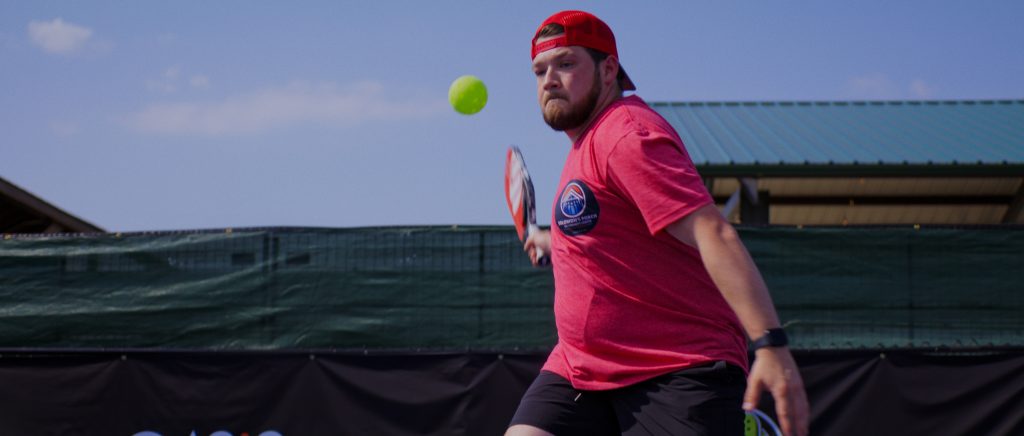
Once the tournament begins, the film finds a better rhythm. The introduction of commentators adds energy and helps guide the audience through the matches. It is a nice touch, and the presence of Glenn Morshower in this role adds a bit of recognisable weight to the proceedings. The competition itself builds as expected, with Solomons Porch working their way through the bracket towards a final showdown against their rivals from Pickleball Powerhouse Gym.
As with most films of this nature, the final match delivers the expected tension, with the underdogs facing off against the more polished opposition. It is familiar, but it works, and the film leans into that familiarity without apology.
Ultimately, Pickleball: The Movie is not trying to be groundbreaking. It is a straightforward, good natured sports comedy that follows a well worn formula. While it has its flaws in pacing, polish, and consistency, there is a clear sense of enthusiasm behind it. A lot of effort has gone into bringing the project to life, and that comes through on screen.
For audiences willing to embrace its tone, it offers a fun, easy going watch. And who knows, by the time the credits roll, you might even find yourself curious enough to pick up a paddle and give pickleball a go.
| Acting | |
| Direction | |
| Cinematography | |
| Writing | |
| Sound | |
| Screen Critix Rating |