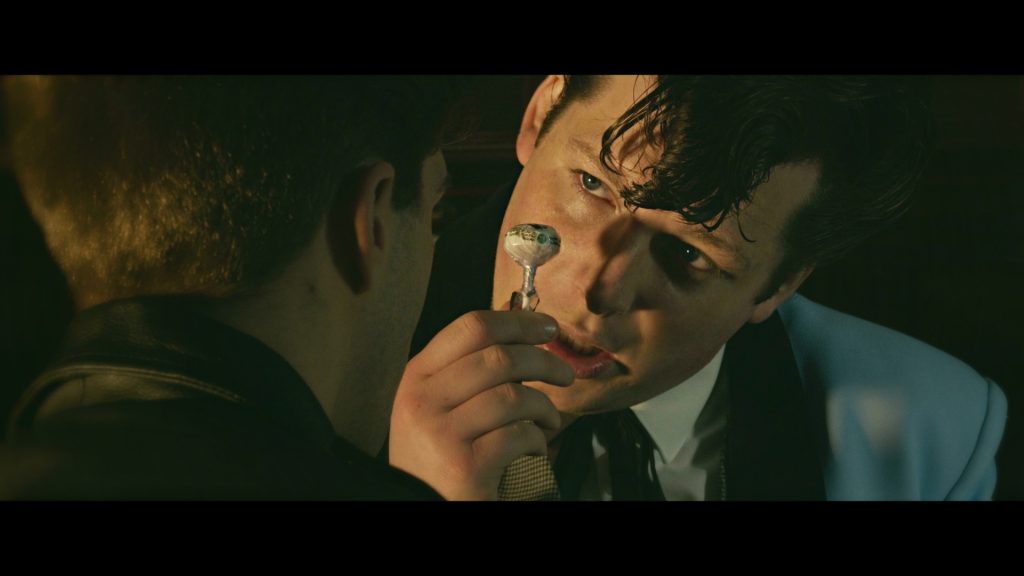
Set against the backdrop of the late 1950s, Andrew Games’ independent feature, “Dandilicious,” immerses the audience in the subculture of Teddy Boy Marty. The narrative unfolds through a tapestry of conflicts, love affairs, and encounters with law enforcement.
In the current cinematic landscape, the United Kingdom emerges as a crucible for burgeoning talent, exemplified by remarkable independent productions in recent years. Notable among these are “Foretoken – Omen of the Outsiders,” “A Light Through Coloured Glass,” “Guest 2,” and “Sous Le Courant,” all lauded by Screen Critix. These films, helmed by adept writers and directors, signal a transformative potential within the realm of cinema. With “Dandilicious,” Andrew Games also stakes his claim on this promising horizon.
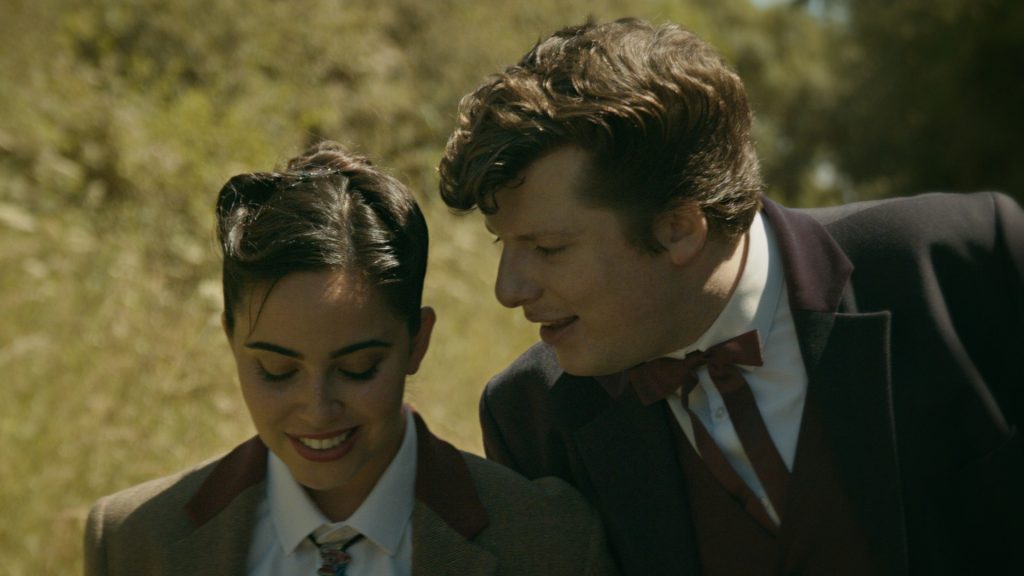
Written, directed, and starring Games himself, “Dandilicious” unfolds as a stylish, humorous, and intriguing cinematic endeavor centered around Marty, the self-proclaimed “King of the Teds.” The film opens with Marty breaking the fourth wall, establishing a unique connection with the audience. Crafted to emulate an aged aesthetic with a 4:3 aspect ratio and Super 16 film grain, the film presents a distinctive visual allure. In this introduction, we also encounter Emily, portrayed by the talented Chloe O’Gorman, known for her noteworthy stint on The X-Factor where she wowed judges with her rendition of a Joss Stone song. O’Gorman’s transition from a 17-year-old contestant to a compelling actress underscores her versatile talents in both acting and singing.
As the film progresses, the aspect ratio shifts to widescreen, accompanied by a more modern film grain, reminiscent of a synthesis between the Tom Hardy starring “Bronson,” a Quentin Tarantino film, and Kubrick’s classic “A Clockwork Orange.” Games skillfully navigates Marty’s crime-ridden existence, marked by clashes with fellow Teddy Boys, altercations with law enforcement, and a formidable showdown with the rival figure, Big Tony (Christian Greenaway).

While the cinematography, credited to multiple individuals (probably due to the time it took to make the movie, clashes in scheduling, and budgetary constraints), demonstrates commendable proficiency, a minor critique emerges in the form of incongruous modern elements in certain background shots, detracting slightly from the film’s otherwise meticulous attention to period details.
A standout feature of “Dandilicious” is its soundtrack, a sonic time capsule that effectively transports the audience to the 1950s, complementing the visual narrative with resonant authenticity.
In defiance of conventional advice advocating against juggling multiple roles in film production, Games emerges as a unique exception. His prowess extends beyond writing and directing, as he delivers a charismatic portrayal of Marty, captivating the viewer with a joyful wink.
While “Dandilicious” underwent a considerable time for completion, the result appears to justify the wait. Games emerges as a distinctive voice in the realm of UK filmmaking, and one anticipates further contributions from him in the near future.