
Dear Iris is an independently made Canadian feature that opens with gentle imagery of butterflies and flowers before introducing us to Iris, a nonbinary character preparing to attend a Pride event. It is a soft, reflective beginning that suggests a personal and introspective film. However, the tone shifts very quickly when Iris is struck by a car shortly after leaving the house. The incident itself is not shown on screen, and instead we see the aftermath, with Iris left injured and later taken to hospital by their mother.
Following their release from hospital, the film begins to lean into its central supernatural premise. Iris experiences rapid hair growth and increasingly strange occurrences around the home, hinting at paranormal forces influencing their life. On paper, this is an interesting idea, especially when paired with themes of identity, transformation, and recovery. Unfortunately, the execution does not always match the ambition of the concept.

A large portion of the runtime is devoted to scenes of Iris brushing their hair, sitting quietly, wandering through the garden, or simply existing in the space. While these moments may be intended to feel atmospheric or symbolic, they often come across as filler rather than meaningful narrative progression. The pacing becomes noticeably sluggish, and at one hour and forty minutes, the film feels far longer than its runtime would suggest.
Some of the more surreal moments include Iris’ hair seemingly reacting to their surroundings, including a sequence where it appears to interact with plants and another where it becomes caught against a closet door. These scenes are clearly aiming for abstract, paranormal imagery, though the limitations of the production make them unintentionally humorous rather than unsettling. Instead of building tension, they often break immersion due to the visibly low-tech execution.

The film also features multiple dance sequences and repeated musical cues, which seem to be part of the filmmaker’s stylistic approach. While artistic expression is always welcome in independent cinema, the repetition of these moments slows the film further and disrupts any sense of narrative momentum. Just as the story appears ready to explore the supernatural elements more deeply, it frequently detours into extended sequences that do little to develop plot or character.
Visually, Dear Iris is clearly made on a very limited budget, and that is evident in the cinematography, lighting, and overall presentation. Many scenes feel closer to a home movie aesthetic than a polished feature film, with minimal attention paid to framing, blocking, or visual composition. The lighting is often flat or poorly balanced, and the colouring lacks consistency throughout. That said, it is also fair to acknowledge that independent filmmaking frequently involves working with extremely limited resources, and simply completing a feature is an achievement in itself.

The sound design is another area where the film struggles. Dialogue recording can be harsh and uneven, with noticeable audio inconsistencies and occasional intrusive background buzz that distracts from the viewing experience. Strong sound is often one of the most important technical aspects of low budget filmmaking, and here it unfortunately undermines several otherwise sincere moments.
One aspect that does stand out more positively is the music. Early in the film, particularly during the Pride preparation sequence, the soundtrack features an atmospheric synth style that evokes an 80s-inspired soundscape and works surprisingly well. These musical choices occasionally elevate scenes that might otherwise feel visually static. However, this is contrasted by an overuse of sentimental piano tracks later in the film, which become repetitive and lose emotional impact over time.
According to its own overview, Dear Iris presents itself as a “trans-paranormal” film, blending supernatural elements with themes of identity, love, transformation, and authenticity. The intention behind this is clear, and there is a personal, heartfelt core within the project that deserves recognition. The film is not lacking in passion or effort. In fact, it is evident that a great deal of dedication has gone into bringing this vision to life.
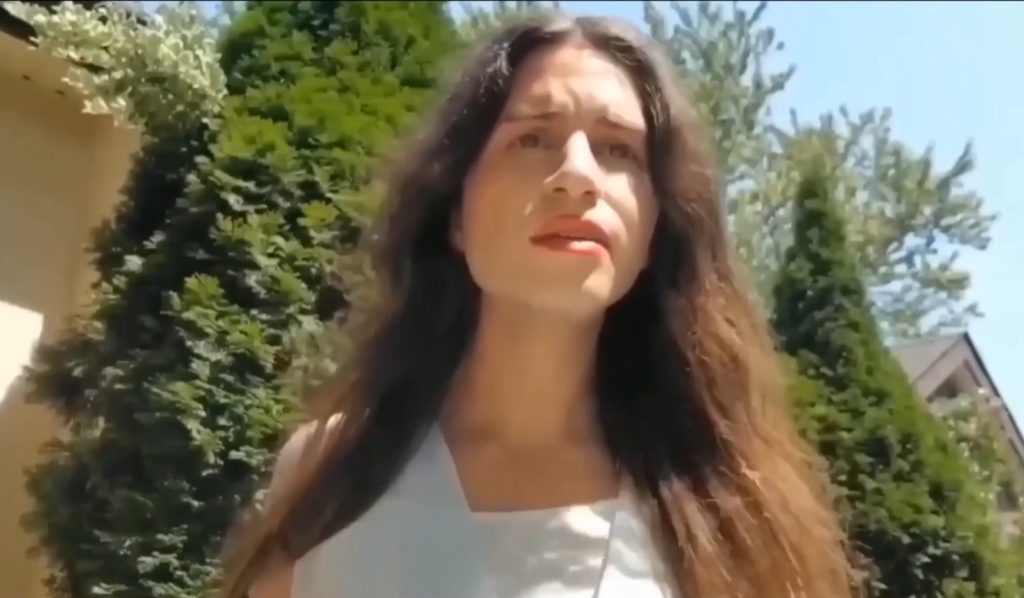
Dear Iris is a low budget LGBTQ+ experiment
Where the film ultimately falters is in its structure and technical execution. The narrative is thin and stretched across a feature length runtime without enough story to sustain it. Combined with amateur-level production values, uneven audio, and excessive filler sequences, the final product feels more like an experimental home project than a fully realised feature film.
That being said, it would be unfair to dismiss the film entirely. Independent creators should absolutely be encouraged to make the films they want to make, especially when tackling personal and niche subject matter. Dear Iris clearly comes from a place of creative sincerity, and that alone is commendable. Miko Drake Christoforou, also known as Mikomi, has shown determination in completing a full-length feature, which is no small feat regardless of budget.
While Dear Iris may not meet the professional standards of many other feature films submitted to Screen Critix, it does demonstrate effort, ambition, and a willingness to explore unconventional storytelling. With stronger pacing, improved technical polish, and tighter editing, future projects from the filmmaker could be far more effective. For now, Dear Iris stands as a deeply personal but technically rough indie experiment that will likely appeal most to viewers interested in ultra-low-budget, experimental LGBTQ+ cinema rather than mainstream audiences.
| Acting | |
| Direction | |
| Cinematography | |
| Writing | |
| Sound | |
| Screen Critix Rating |