
Mark Schwab’s Cutaways dives headfirst into the sleazy underbelly of indie filmmaking with wicked humour and sharp insight. It’s a no-budget porno shoot, a cancelled director, and one hell of a comeback story.
Mark Schwab’s Cutaways is a sharp, funny, and intimate film that takes aim at the indie filmmaking world through a very unusual lens. At once a character study, a queer industry satire, and a reflection on cancelled culture, the film unfolds almost entirely in a single warehouse location. Despite the restrictions, Schwab finds depth, humour, and drama in every corner of the set and in every one of his vividly drawn characters.
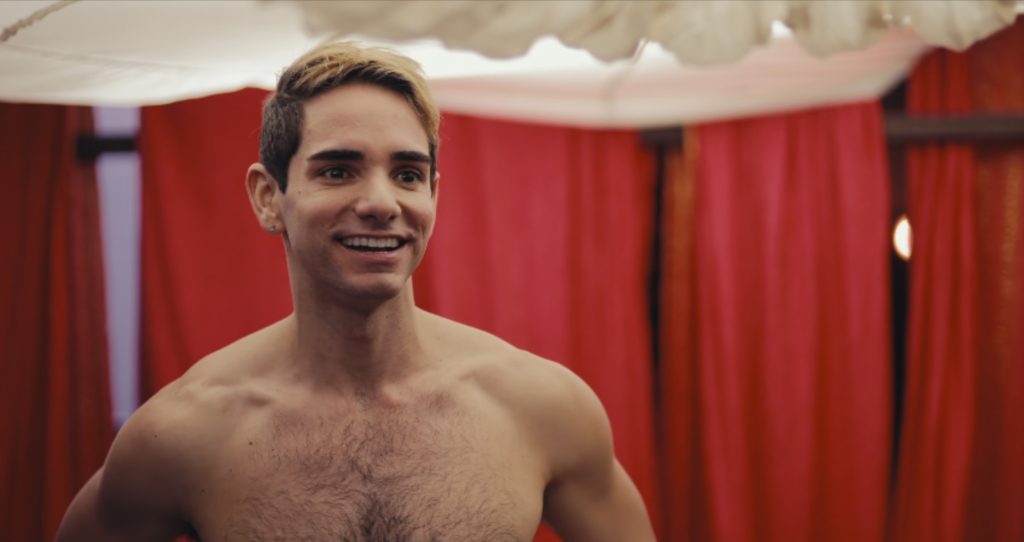
Silas Kade, credited here as Jacob Betts, stars as Evan Quick, a former Sundance-winning filmmaker whose career was derailed by social media backlash. Now, far removed from arthouse acclaim, Evan is reluctantly directing low-budget adult content for shady producer Sammy Slade, played with grinning sleaze by James Duval. The day is already teetering on disaster when Sammy shows up with Trace, a wide-eyed newcomer played by Jason Caceres, adding a new layer of complication to an already strained shoot.
Despite the modest setup, Cutaways quickly finds its voice. Schwab’s writing feels lived in, filled with cutting dialogue and the kind of emotional undercurrents that bubble beneath sarcastic quips and weary glances. While the premise may sound far-fetched, the film never plays its characters for easy laughs. There is dignity in Evan’s exhaustion and sadness behind the bravado of his crew.
Cutaways captures a dying dream and the chaotic grind of reinvention
The supporting cast is equally strong. Fernando (billed as Fernando Jose) brings a strange, jittery charm to Andy Clive, a blue-haired former child actor now struggling with obsolescence. Diogo Hausen’s Ryan is the handsome but dim actor whose presence is more about aesthetics than substance, and Jason Caceres as Trace strikes a delicate balance between innocent enthusiasm and strategic ambition. These personalities bounce off each other with sharp timing, making for scenes that are fast, funny, and occasionally quite touching.
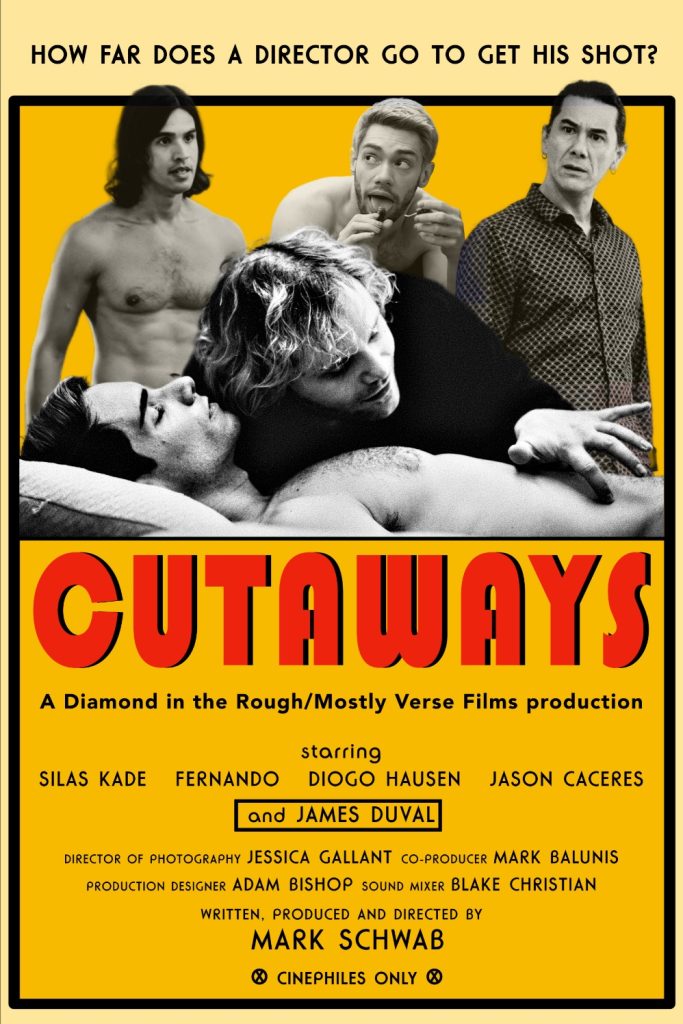
The one-location setting becomes an advantage rather than a limitation. Schwab and cinematographer Jessica Gallant use the space inventively, carving up areas of intimacy and conflict within the same grimy industrial walls. The film grain aesthetic lends the piece a rough but cinematic edge, while Blake Christian’s clean audio recording ensures the dialogue always cuts through clearly. Craig Austin Wingate’s understated score gives added emotional weight without pushing too hard.
What makes the film so effective is that it never loses sight of its humanity. Evan is not a martyr or a villain. He is a tired man trying to survive a version of his career that he never imagined. The dialogue occasionally leans into exposition, particularly when Evan reflects on his downfall, but these moments are brief and mostly grounded in character. Schwab allows the drama to grow naturally from the interactions, rather than from plot twists or gimmicks.
There is also a strong sense of queerness woven into the fabric of the film, not just in terms of casting or setting, but in the themes of reinvention, marginalisation, and found community. Schwab has always infused his films with LGBTQ+ identity in thoughtful ways, and here it comes through in the tone and tenderness with which each character is treated, no matter how lost or absurd they may seem.

The final third of Cutaways delivers both comedy and a surprising emotional beat. The complications that arise are unexpected yet grounded, and they allow Evan to make a decision that reinforces the film’s central question: how far will someone go to reclaim meaning when the world has taken their platform away? Schwab’s answer is not dramatic in the traditional sense, but it is honest and satisfying.
At 91 minutes, the film moves briskly. It never overstays its welcome, though some emotional beats might have benefitted from just a little more time to breathe. Still, this is a confident, character-driven piece of filmmaking that plays with tone and expectation in rewarding ways.
Cutaways is not a crowd-pleaser in the conventional sense, but it is funny, smart, and deeply character-focused. Schwab continues to grow as a filmmaker, and this might be his most polished and emotionally resonant work yet.
| Acting | |
| Direction | |
| Cinematography | |
| Writing | |
| Sound | |
| Screen Critix Rating |